
Australia


🗺 Menu of Contents:
Australia implies in its name distance and size, it is the largest country in Oceania. When travelling to Australia, most travellers around the world (except Asia) have to endure very long haul flights with transits. Making probably worth while staying a little longer to discover one of the most unique places on the planet, with abundant natural beauty as well as a open-friendly society and modern cities offering all the comforts. Australia might have started life as a British prison colony, but it has evolved into one of the world's premier tourist destinations.
Australia is the world's sixth-largest nation by land area, therefore there is much difference from one region to another. From the monolithic rock at Uluru; to the wild, untamed and unforgiving Outback; to the colourful wonder of the Great Barrier Reef off Queensland's sun-soaked Gold Coast, Australia possesses some unique and unforgettable sights.

Just one of the many impressive sights to see in Australia, the Great Ocean Road Active travellers into sports and water will love Australia's 'outdoors culture', and a huge array of sports and activities, including swimming, diving, snorkelling, surfing, bush walking, hiking, mountain biking and even skiing, are popular with locals and tourists.
Also, city travellers and culture buffs will find it really appealing coming to Australia. All cities are clean, cosmopolitan and youthful, Australia's urban centres (including Sydney, Brisbane, and Melbourne) are world-class. Famous cultural attractions in Australia include the Sydney Opera House and Harbour Bridge, the Australian Museum (Sydney), The Great Ocean Road (Melbourne), Uluru Rock (Northern Territory) and the Museum of Old and New Art (MONA) (Hobart).
All cities in Australia are clean, cosmopolitan and youthful, Coming to Australia is like taking many holidays in one, where you can combine a lot of sightseeing, relaxing on the great beaches and sampling some of the local beer (of which there are many brands), or venture into the many tour activities testing your adventurous side and powering up your adrenaline!
The land Down Under, is one of the best destinations you could travel to, and come back with loads of good memories and great things to share about!
Wallabies form part of the local fauna found all around Australia! Once arriving to Australia, you need to clear Customs. It's a very sensitive area and you are advised to take extra caution on what you take into the country. Anything which is food related, drink, or naturally produced will be confiscated by the customs department. (for example animal skins, wood, plants, food, or anything organic). You will need to declare any of these products or face a fine.
If you are connecting to a domestic destination by air be sure to collect your luggage at the first point of entry into the country even if the luggage has been tagged all the way to final destination. This is to clear customs.
❗Attention: Before arriving in Australia ALL TRAVELLERS need to get the "OK to Board". This is the message airlines will get when processing your passport into the system and checking that every passenger has applied for an electronic visa to enter Australia (or transit). The ETA (Electronic Travel Authorisation) is a compulsory requirement that all visitors must apply for if they wish to travel. It takes from a few hours to process, to a few days, depending which level of service you select.
Apply for it via APP or check more info via the following website: "Eta Visa application"
Its precisely the location and distance from any other country which makes Australia accessible only by air. The island is 3.500 km in length so even travelling domestically is better to take a flight. The country offers 3 major gateways, Sydney, Melbourne and Perth. These cities are connected internationally by major airlines. However Qantas, the national airline, has the biggest presence on the island. Other airlines which offer good connections to Australia are Emirates, Singapore Airlines, Thai Airways, British Airways or Malaysian Airlines to name a few.
The length of time travelling to Australia must be one the longest flights you can take. Making a stopover at an Asian destination is a typical routing if travelling from Europe. Expect a travel time of at least 20h hours. However with modern planes in operation, there is the route London-Perth operated by Qantas which takes 17 hours and is the only direct route (and first one ever) to link Australia with Europe on a schedule service.
Travelling around the (big) island is fairly simple. The main and best option is to travel by air, Qantas, Jetstar and Virgin Australia offer the best connections.
You can also go to certain destinations by train, but trips are often extremely long and pricey.

Qantas and its subsidiary JetStar are the best airlines when travelling across the country. Driving is safe, and usually in quite straight forward thanks to excellent roads around the country, linking all the major cities. Travelling around the coastline is a good recommendation. However internally, the high temperatures of the Australian desert and the lack of services for many miles can cause a big problem if you encounter a breakdown not to mention the vast distance needed to drive. (in this case flights are the only option for many smaller communities).
Last to mention is the alternative to travel by bus, Greyhound Australia, provides comfortable busses connecting the major cities with smaller towns. Prices are reasonable but make sure you check the distances and the times. Sometimes even flights can be cheaper if you buy well in advance.
Greyhound provides affordable travel in Australia, but it takes many hours on the road! Australia's climate varies greatly throughout the eight states and territories; there are four seasons across most of the country and a wet and dry season in the tropical north.
Australia's seasons are at opposite times to those in the northern hemisphere. December to February is summer; March to May is autumn; June to August is winter; and September to November is spring. Temperatures can be as hot as 40°C in central Australia whilst close to 0°C can be recorded in the south.
The best time for travelling to Australia is to go September to November for tourism. Avoiding the high season is best (December and January) as prices are more expensive and the heat can make it hard doing certain activities. Plan ahead, depending where you will be go, as you can encounter really hot and dry climates towards the north and outback of the country (Darwin, Cairns, Alice Springs (Uluru), Brisbane, Gold Coast) or cold/humid weather conditions towards the south (Melbourne, Tasmania, Adelaide).
Australia is generally dry and hot 
In the south lush vegetation and tropical rain forests are abundant. 
Attention needs to be paid at the currents, as they are extremely strong. For more detailed information regarding the weather in each city or region please see the guides below.
Australia is perhaps not as famous for its food than its landmarks. However there is an increase of popularity of big-name chefs who are helping to give Australian cuisine a reputation for bright, creative gastronomy, and regional markets and food festivals are commonplace. Look out for things like farmhouse cheese, speciality sausages and local fruits. Elsewhere, the country’s multitude of good wines has earned international acclaim.

From local produce to imported, Australian Markets have a great variety! Australians love their meat, in particular beef and national kangaroo meat is growing in popularity with visitors. The humble barbecue remains a quintessential Australian food experience. Steak, prawns and beer tend to feature prominently on all tables and restaurants. Portions are quite large so be sure to be hungry when eating in Australia!
Specialities include: Sydney rock oysters, small and soft with a distinctive taste. Barramundi, a fish particularly prevalent in the Northern Territory. Macadamia nuts, native to New South Wales and Queensland. Kangaroo, just like a steak you can order Kangaroo at your wish, raw, medium or well done. Meat pie, a staple on-the-go snack. Fruit, apples, mangoes and pumpkins are among those grown in large quantities. Dagwood dog, a deep-fried battered hot dog on a stick, popular at fairgrounds and outdoor events.

Just like a steak you can order Kangaroo at your wish, raw, medium or well done, or in Pizza! 
Fish&Chips is a National Favourite, from the much influencial British. Australia's is also known for its international foods! Popular and highly-rated cuisines include Italian, Chinese, Indian, and Japanese, with a strong appreciation for fresh seafood, local produce, and diverse cultural influences. Other international favourites include Greek, Thai, and Middle Eastern dishes which form the array of restaurants and offerings in the big cities! In all major towns, however its very popular to still find Chinese and Japanese as a major dinning option. Its not hard to find a local Asian restaurant in any of the suburbs as well! Some districts in Sydney, Melbourne, Brisbane and Perth even are exclusively Asian focussed!

With growing foreign cultures present in Australia, its now easy to find also Middle Eastern food. 
Laksa, a speciality in Malaysia, can be found in the major cities. 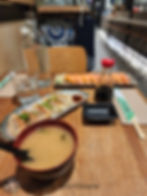
Japanese, is one of the more popular cuisines to find! 
Taiwanese Beef Noodles, another foreign but delicious option to enjoy! 
Growing now are Vietnamese restaurants! 
Can't forget popular Italian appetizers and snacks! You will notice as well that Australians love coffee! That's because there is a big coffee culture here! The coffee is characterized by its quality and variety, from simple cappuccinos to complex espresso drinks. It's also very typical to accompany this with a pastry or the iconic bacon and egg roll, often called a "brekkie roll," which is eater at breakfast or brunch! Australians customize their rolls with additions like tomato sauce, cheese, and aioli, or even more gourmet options!

Grab a good bacon and egg roll with your coffee any time and nearly any place in Australia! 
Great healthy options include soup as well when having brunch! 
Coffee and Pastry culture is big in Australia! As for drinks, Wine is locally produced and is becoming quite popular even for exports. Regions like the Barossa Valley in South Australia, and Margaret River in Western Australia, are world class. Craft beer: Away from the likes of VB, you’ll find some excellent small-batch brewers. Sparkling wine, the bubbly from Tasmania is superb.

Wine in the south of Australia, is exceptionally popular and famous! While Australia is generally a safe country, with relatively low crime rates, there are a few important rules to keep in mind.
The current security situation in Australia is stable – it is a developed country with well-functioning emergency services and an efficient police force. In large cities such as Sydney, Melbourne and Brisbane, crime is mainly limited to petty theft, especially in crowded public places. Avoid carrying visible cash, keep documents and valuables close to you and always lock your car or hotel room. After dark, it is better to move around on well-lit, busy streets, especially in lesser-known districts.
To avoid dangers while in Australia, it is worth keeping up to date with local weather reports and warnings about bushfires, tropical storms and floods. Nature can be unpredictable, especially in the northern and central regions of the country. Avoid going alone to forests and national parks without reporting your route in advance and taking a supply of water and sun protection. It is also worth knowing that Australia is a country of many poisonous animals - snakes, spiders and jellyfish. Most of them are not aggressive, but if you are bitten, you should call for help immediately.
Public transport in cities – buses, trams, metros – is well organised, although it is worth being vigilant at night. When using transport services such as taxis, it is worth choosing officially registered companies and avoiding unmarked vehicles. There are also numerous transport apps in larger cities (e.g. Uber, Bolt, Black & White Cabs) that allow you to order a ride with a chosen driver and monitor the route of your journey.
Driving is generally safe with an advanced infrastructure. Australia is a country where you drive on the left side of the road, which can be a challenge at first. Remember that the distances between cities are huge, and some routes lead through the wilderness, where petrol stations and aid stations are very rare. At night, watch out for wild animals coming out onto the roads - especially kangaroos and emus.
Water safety is a separate, very important topic. Australia has some of the most beautiful beaches in the world, but also some of the most dangerous. Only swim where the beach is guarded, and always between red and yellow flags - this is a sign that lifeguards are nearby. Popular beaches such as Bondi, Manly or Surfers Paradise have strong reverse currents that can carry away even experienced swimmers. In the northern regions, especially in Queensland, during the jellyfish season, special protective nets should be used, and clothing should be worn to protect the body from burns. In tropical areas, crocodiles are an additional threat - do not enter the water in unknown places!
If you are going to the mountains, for example the Australian Alps (with Mount Kosciuszko) or Blue Mountains, be careful. The weather in the higher parts of the mountains can change very quickly. Take a charged phone or extra charger, appropriate clothing, and water. In many places there is no signal.
One of the most important aspects of health protection in Australia is the sun. UV radiation can be much stronger here, than in Europe, so sun protection is absolutely essential. Wear hats, sunglasses with a UV filter and regularly apply creams with a high factor - at least SPF 30, and preferably SPF 50+. It is also worth remembering to drink plenty of water - dehydration, especially in the hot interior, comes quickly and unnoticed. Do not forget about the threats posed by Australian fauna. Although encounters with dangerous animals are rare, it is good to know how to behave. If you are going for hikes in forests or national parks, wear closed shoes and long trousers. Avoid sitting on the grass without checking your surroundings, do not put your hands in rock crevices and always carry insect repellent with you - mosquitoes and ticks can be very troublesome here. In tropical regions, you can also encounter dangerous jellyfish, so during the holiday season it is worth swimming only in guarded areas and following the warnings of local authorities.
When it comes to transport, Australia is a country where many people choose to travel independently by car. This way of sightseeing is convenient and gives independence, but requires caution. Travel only when well rested, avoid driving after dark – this is when a lot of wildlife, such as kangaroos and wombats, appears on the roads. In more remote areas, carry a supply of water, food and a full tank of fuel. In the event of an accident or the need to contact the emergency services, the emergency number in Australia is 000.
Staf safe and enjoy your trip in Australia!

Despite being a safe country, the weather poses the biggest risks. Specially intense sun and a dry air. Australia is a unique destination for many travellers wanting to explore it at least once. After having visited it the first time in 2009, I realised you can't only go once. It's a vast country which offers so much to see and do. Definitely the highlight of any trip to Australia is to see the Opera House live with your own eyes! It truly stands out from the city and gave me that feeling of satisfaction for reaching such a landmark, miles away from home.
Then in 2014, I had the opportunity to visit again, this time to Perth and Melbourne, cities which both surprised me for the amount of things to see and do and the beauty that surrounds them, specially in Melbourne. Joining a tour on the Great Ocean Road, which takes you along some of the most impressive natural landmarks of the coastline. Despite the weather not always on our side, it still provided some great photographic snaps to remember for many years. It was revisited again in 2025. This time taking a much more in depth tour, starting from Sydney, and taking me to Brisbane, Darwin, Alice Springs, Uluru, Adelaide, Hobart and back from Melbourne. The contrast this time was truly amazing to see the contrast from city life to rural and appreciate the culture and history from the aboriginal, who mostly are located in the Northern Territory State. It made me realise as well the harsh weather conditions, of the north and outback with dry climates and intense sun radiation which one, needs to protect always. Yet as I travelled along the Northern Territory it was not only dessert and openness, but there are incredible scenery with rock formations, gorges, lush green mountains and ranges which have made this region so popular in visiting. It's once in a lifetime to experience the sun setting on the Uluru rock and see it change colours and enjoy a BBQ as you meet other travellers.
Australia surprised me in so many ways, the friendly people, the relaxed atmosphere, year round good weather, great food and unlimited things to keep you entertained.
I look forward in coming back again and discovering even more!

Friendly locals, animals and good weather will welcome you with open arms to Australia!


