


🗺 Tourism Information
Sapporo, is the vibrant capital of Hokkaido Prefecture. It offers first-time visitors a refreshing blend of modern city life, rich history, and dramatic seasonal beauty. Founded in the late 19th century during Japan’s rapid modernization, Sapporo was carefully planned with wide boulevards and green spaces, giving it a distinct layout unlike many older Japanese cities. Today, it is best known internationally for the annual Sapporo Snow Festival, which attracts millions of visitors with its impressive ice and snow sculptures, and for Sapporo beer, one of Japan’s oldest breweries.
Traveling to Sapporo is easy, with direct domestic flights from major Japanese cities and many Asian destinations. The Hokkaido Shinkansen also is connecting the island to Honshu. In the city, the efficient subway system makes sightseeing straightforward for visitors. Don't miss attractions which include Odori Park, which runs through the city centre, the historic Clock Tower, and the Sapporo Beer Museum. Just outside the city, travellers can enjoy nearby hot springs, ski resorts, and unspoiled nature, making Sapporo an ideal gateway to Hokkaido’s landscapes. In recent years, the city has gained attention for its food scene, especially miso ramen and fresh seafood, further enhancing its appeal as a top travel destination!

Sapporo is most popular to visit in Winter around February when the Snow Festival takes place. Embrace freezing temperatures but picaresque scenery and traditional Japanese culture. The climate in Sapporo is characterized by long, snowy winters with an average of 143.5 days of snowfall per year. In contrast, summers are delightful with low humidity and pleasant temperatures.
The first snowfall is in October and by December the city is covered in snow. There is much snowfall with the average annual snow accumulation at 500cm. However, with efficient measures for snow removal in place, there is minimum effect on daily life.
Winter in Sapporo, from December to February, is long and cold, with heavy snowfall defining the season. Daytime temperatures usually range from -5°C to 1°C, while night-time temperatures often fall between -10°C and -15°C, and can occasionally drop even lower during cold snaps. Visitors must be well prepared with insulated winter coats, thermal layers, waterproof boots with good traction, gloves, scarves, and hats. Sidewalks and roads can be icy, so slip-resistant footwear is essential.
When visiting Sapporo, seasonal planning is crucial. Winter travellers should allow extra time for transport delays due to snow, while summer visitors should stay hydrated and be ready for temperature changes between day and night. If you visit in the Summer, you will like to know that the characteristics is that there is no rainy season and is not affected by Typhoons. The water resources are abundant due to snow that remains on the mountains into the summer, which acts as storage of water. The average temperature reaches 22℃ in the summer, but the humidity is low and the temperature is cool during the morning and evening. Making it an ideal summer escape from other hotter countries, or Japanese regions.

Considerations must be made when travelling to Sapporo in Winter as temperatures can often fall to -10C! However, when it is no snowing and sunny its a pleasure to be out! Sapporo, is well connected by an efficient and easy-to-use public transport system. Most visitors arrive via New Chitose Airport, located about 45 km south of the city. The fastest option is the JR Rapid Airport train, which runs every 15 minutes and reaches Sapporo Station in about 37 minutes. The one-way fare is approximately 1,150 yen. Airport buses are also available, taking 60–80 minutes depending on traffic, with fares around 1,300 yen. However, on Winter days with heavy snow the times might double.
Within the city, public transport consists mainly of the subway, trams, buses, and JR commuter trains. Sapporo has three subway lines—Namboku, Tōzai, and Tōhō—covering most central areas. Trams (streetcars) operate in the southern part of the city on a loop line, you pay always when you get off the tram.
Payment is simple using IC cards such as Kitaca, Suica, or PASMO, or by cash. Subway and JR services generally operate from 5:30 a.m. to around midnight. An interesting feature of Sapporo is its underground pedestrian network, allowing people to move between stations in the city centre and shopping areas comfortably during snowy winters.

From the airport, you can take modern comfortable busses taking 1 hour to reach the airport (2 if heavy snowing conditions). 
Streetcars (trams) provide a circular service within Sapporo centre. 
Comfortable busses provide access to all local areas where the metro does not reach. 
Sapporo has an underground pedestrian network, where you can stay warm, do shopping and commute in the colder months. Visiting in Sapporo and Hokkaido will depend much of the time of the year you are visiting. The author visited during the beginning of the Winter so this guide will reflect mostly on Winter activities and places to see during Winter.
Sapporo is Japan’s fifth biggest city, and the largest north of Tokyo. Sapporo became world-famous in 1972 when the Olympic Winter Games were held there. Today, the city is well known for its ramen, beer, and the annual snow festival held in February. The Winter months with most snow last from December right until the end of March. However during November and April is common to see it snowing but it doesn't settle as much during these months and creates a more dirty snow once it melts on the streets. The highlight of any trip to Sapporo must be to see the yearly Winter Snow Festival, held during early February, when the city is at its coldest! Come prepared to discover this city, with warm clothes, gloves, hats and sunglasses! Below are the main highlight of a trip to Sapporo in the Winter Months:
Sapporo Snow Festival: Held early each February, this world-famous winter festival showcases enormous snow and ice sculptures across Odori Park, Susukino and Tsudome. The Festival has its roots as a project to turn the harsh winter into something to celebrate. It began in 1950, when local middle and high school students created snow sculptures in Odori Park. The festival has since grown to become Sapporo’s most iconic winter event.
Snow sculptures are over 10-meters tall that are breath-taking in both scale and complexity. For those who want to get active, the Tsudome Site is a playground of giant slides and snow tubing that is ideal for children. Even the neon-lit district of Susukino is transformed into an open-air art gallery with an abundance of intricate ice sculptures. Sculptures are illuminated at night, creating a dramatic atmosphere.

Held early each February, the Snow Winter Festival showcases enormous snow and ice sculptures across Odori Park. Mount Moiwa: it offers one of Japan’s most beautiful night views, overlooking Sapporo and Ishikari Bay. To get there, you will need to take a ropeway and mini cable car that lead you to the summit observatory, making it accessible year-round.
To get there, you can take the tram to "Ropeway Iriguchi", from there walk 10 minutes to the Ropeway Entrance. The trip costs ¥1,800 round trip. Running every 15-20 minutes. You need to change to a mini cable car after the main Ropeway Cable Car.

The entrance to the Ropeway is 10 min away from the closest tram stop. 
Cable cars run up every 15-20 min. 
The views at the top might be obstructed by heavy clouds on bad days. Sapporo TV Tower: Sapporo TV Tower is one of the city’s most iconic landmarks and was built in 1957. This broadcast tower stands at a height of 144m at the eastern end of Odori Park, right in the heart of the city.
You can ride the elevator up to the observation deck, in the open air to take in 360-degree panoramic views of the city. Be sure to check out the “window of thrills,” where you can lean out over a glass panel that extends from floor to ceiling.
On a clear day, the view stretches all the way from the Sea of Japan to the edge of the Ishikari Plain.
Sapporo TV Tower is a great way to start or end any trip to Sapporo. The ideal spot for a photo of the TV Tower itself is 3 Chome in Odori Park, where the subway exit emblazoned with the city’s name combines with this iconic landmark to create one of Sapporo’s most representative images. The entry to the Tower is ¥1200 per adult. More info check tv-tower.co.jp/en/

To access the Tower is ¥1200/adult. 
The Tower is the ideal spot for a photo of Sapporo, where the subway exit emblazoned with the city’s name combines with this iconic landmark to create one of Sapporo’s most representative images Odori Park: A green area (white in Winter) stretching through central Sapporo, hosting festivals year-round including the Snow Festival and summer beer gardens. It divides the city and offers relaxing city views as you walk through it.

Odori Park is stretching through central Sapporo and gives the city a wide feel and relaxed. Teine Ski Resort: is a former 1972 Winter Olympics venue, Teine is known for quality powder snow and panoramic views of the city and the sea in the distance. It’s suitable for both beginners and advanced skiers. To get there you need to take the JR to Teine Station + take a bus. Once at the entrance the access for the lift pass is approx. ¥6,000
Sapporo Beer Museum: This historic red-brick museum tells the story of Japan’s oldest beer brand, founded in 1876. Exhibits cover brewing history, Hokkaido development and beer culture, with tasting options available. To get there, you can take a Bus from Sapporo Station, route number 19 , 63 pass nearby or you can take the direct route 188.
Museum entrance is free, but you will need to pay extra for the tastings!
Shiroi Koibito Park: A charming chocolate factory, museum and themed park dedicated to Hokkaido’s iconic cookie. Visitors can watch production, create sweets and enjoy European-style gardens. To get there, you can take the subway to Miyanosawa Station.
The Factory tour is approx. ¥800.

Despite its square appearance outside, there is a lot to see inside and taste! 
Inside the park there are European inspired parks with cafes and amusements. 
For Chocolate lovers, its a paradise and a heaven of shops and tasting! Susukino: It's Sapporo’s vibrant entertainment district is famous for nightlife, ramen alleys, bars and neon lights. It’s also a key Snow Festival site with ice sculptures during the Snow Winter Festival. During the whole year its the main centre of activity in Sapporo. You will be surrounded by crowds buzzing with anticipation for the amazing nightlife here. You’ll see an eclectic mix of izakaya (traditional Japanese pubs), restaurants, bars, karaoke facilities and clubs. No matter how old you are, you’ll never be bored here! There are also Malls and arcades to keep warm during the Winter months.
When it comes to dinner, you won’t know where to start. There are restaurants to suit every palate, from great seafood and local sake to an old-timey alleyway filled entirely with ramen restaurants and upscale dining.
A great way to experience Sapporo’s cuisine and food culture is to head to an izakaya or bar and enjoy a meal with fresh local ingredients. Wash it down with one of Hokkaido’s famous brands of sake and finish up with a parfait made with seasonal fruits and fresh dairy products.


✔️Tip: No trip to Susukino is complete without a ride on the rooftop Ferris wheel. This much-loved part of Susukino’s landscape is the ultimate vantage point for photos of Sapporo’s night scenery. The ferry Wheel costs ¥1000, and to get to it you will need to go to the 7th Floor of the Norbesa Mall.

One evening take the Ferry Wheel over Sapporo for ¥1000 
The ride takes 10 minutes to complete the circle. Jozankei Onsens: A popular half day escape from Sapporo is to visit this scenic hot spring town in the mountains, ideal for relaxation and seasonal foliage. The are several Onsen establishments that offer traditional baths, meals and river views. You can choose the best one that you prefer with prices and more info at Jozankei.jp/en/about/
To get to the region, you can get a tour programme, which includes this activity or go by public bus service from Makomani Station, which connects to the Namboku Subway line. Bus number 12 takes about 45 min for only ¥240. Day baths entry fees range from about ¥1,000 per person.

Taking bus 12 from Makomani Station takes 45 min. 
In Jozankei there is abundant nature and beautiful white scenery when visiting in Winter. 
A laid back town 1 hour away from Sapporo, to enjoy hot springs and speciality food. Nijo Market: is a compact city-centre market known for its fresh seafood breakfasts and kaisendon (seafood rice bowls). It reflects Sapporo’s strong food culture. It's easy to get to from Odori Park or the Sapporo TV Tower, just a 5 min walk away.

Nijo Market is a small one floor market with lots of shops within. 
Aside from the market, there are restaurants and snack places where to enjoy the fresh fish, whilst staying warm! 
The market is known for its fresh seafood breakfasts and kaisendon (seafood rice bowls). ✔️Tip: If you still want to discover more markets and taste more sea food, head over to the Crab Market (Central Wholesale Market). This seafood-focused area outside the wholesale market offers fresh crab, scallops and affordable seafood bowls. It’s popular with locals and chefs. To get there take bus 52 from Sapporo Station.
Sapporo Station: The city’s transport hub is also a hub for shopping, dining and a free observation deck, offering city views! From here you can travel all over Hokkaido region and Japan by the connection with the high speed rail. (Shinkansen).

The Station is massive, because it also incorporates shopping mall and dinning facilities. Sapporo Clock Tower: Last but not least, it's one of the city’s oldest buildings and symbols, dating to 1878. It represents Sapporo’s early development during the Meiji era. It's just a short walk from Odori Park and the cost is only ¥300 per adult.

The Sapporo Clock Tower is located in central Sapporo. 
The inside of the building offers media information and a place where to sit. 
The Clock Tower dates back to 1878. Are you staying a few days longer in Sapporo? Then don't miss some of the activities and day trips we have put together for you to enjoy all the surroundings and wonders of the region! All trips can be done in a day or less and can reach, by tour or public transport.
Otaru, located 40 km from Sapporo. A charming port town famous for its historic canal, preserved warehouses, glass workshops, and music box museums. Seafood and sweets are highlights of what to enjoy in Otaru. Reachable by JR Hakodate Line (about 30–45 minutes) or by Bus direct from the Sapporo Main Station Bus Station.
Otaru Picture Gallery
Historical Village of Hokkaido (15 km from Sapporo) Is an open-air museum showcasing restored buildings from Hokkaido’s early settlement era, offering insight into the regional history. Accessible by subway to Shin-Sapporo then take a bus 38 and walk about 20 min to the entrance.
Noboribetsu and Lake Toya Day Tour: Best when combined together if you do not have much time and enjoy the main sights for only $50-60 USD. This includes transportation and English speaking tour guide. This one-day bus tour takes you through some of Hokkaido’s most scenic and popular winter destinations, combining breath-taking landscapes, cultural highlights, and local experiences—all in a single day.
The combined itinerary takes you first to the Nakayama Pass (Nakayama Tōge). A mountain route famous for its panoramic winter views and snow-covered landscapes. On clear days, you can even catch a glimpse of Mt. Yotei, known as “Ezo Fuji.”
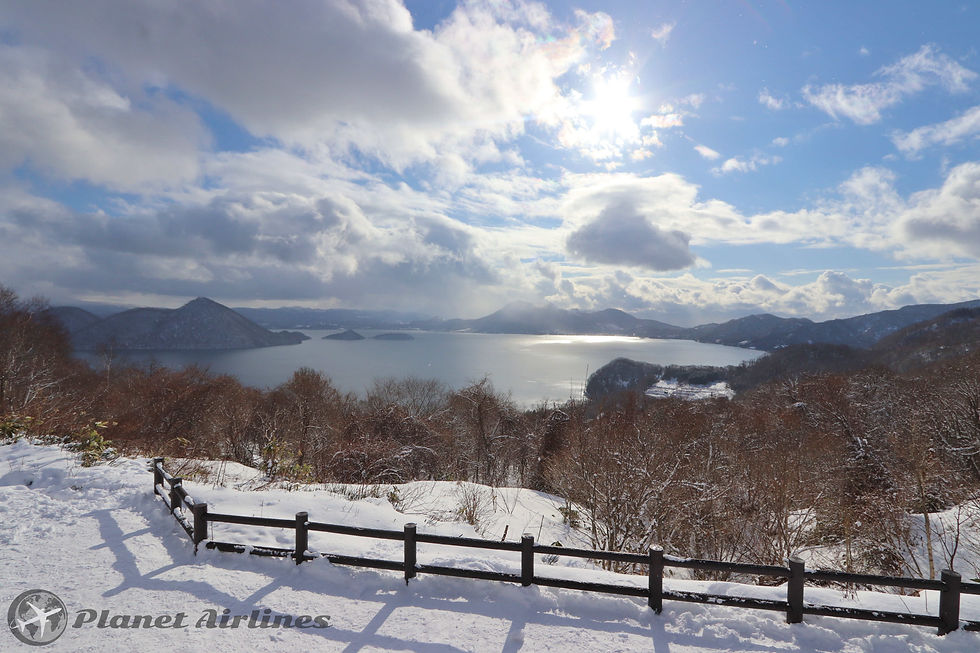
Then continue to Lake Toya Silo Observatory. Which offers a stunning view of Lake Toya, one of Japan’s most beautiful caldera lakes. In winter, the snow-covered scenery creates a serene and magical atmosphere.
After the tour continues to the lake itself, Lake Toya Hot Spring Town (Free Time for Lunch is provided about 70 min). After Lunch the trip continues to the Showa Shinzan & Bear Farm. Showa Shinzan, an active volcano that suddenly rose from the ground in 1944 and remains one of Japan’s youngest volcanic mountains. Right next to it is the Bear Farm, home to about 100 Hokkaido brown bears. You can watch them up close, feed them, and learn more about these impressive animals in a safe environment. The last stop is the Noboribetsu Valley where you can take a walk in the made paths to access the hot pools, but not suitable for swimming or touching the water due to their high concentrate in sulphur and a temperature of 80C! On the return the tour bus will stop at the Mitsui Outlet Park, where you will have 90 min for leisure time or shopping.
✔️Tip: If you prefer the time limitations of the tour, you can reach lake Toya by public bus from Sapporo Station with 4 daily departures. Check online for the timetables and plan your trip in advance. The trip takes about 2.5 hours to reach the lake.
Noboribetsu and Lake Toya Picture Gallery
Yoichi, is another 15km from Otaru or 55 km from Sapporo. Known for the Nikka Whisky Distillery, where visitors can learn about Japan’s whisky heritage and enjoy tastings. Yoichi is a coastal town, popular with surfers from autumn through to spring, but in summer there is little swell, and the coastline is better suited to kayaking and swimming. In July and August, the beaches are popular with campers and other tourists. Many people pass Yoichi on their way to explore Shakotan peninsula or Niseko. Yoichi is also close to local club ski fields such as Niki Ski Field. You can travel via JR train through Otaru (about 1.5 hours from Sapporo).
Sapporo’s nightlife is lively and diverse, blending bars, clubs, izakayas, and entertainment districts. Susukino, the city’s main nightlife hub, is packed with neon-lit streets, karaoke bars, lounges, and nightclubs catering to all tastes. Popular spots include Sapporo Beer Garden for local brews, and themed bars along Ramen Yokocho for late-night bites. Cinemas like United Cinemas Sapporo show late screenings. If you are taking after midnight transportation, most busses and subway work until midnight, so taxis are the only alternative. Uber works well in Japan. As for safety, Sapporo is perfectly safe at night.

Susukino is the centre of nightlife in Sapporo with many bars, karaoke's and late evening dinning options! Shopping in Sapporo offers a balanced mix of modern malls, traditional streets, local food markets and refined boutiques, making it one of Hokkaido’s most enjoyable retail cities.
The main shopping axis is Odori–Susukino, where Tanukikoji Shopping Arcade stretches for several blocks under a covered roof. It’s ideal for souvenirs, cosmetics, fashion, drugstores and tax-free shopping, and stays lively year-round.

The Tanukikoji Shopping Arcade stretches for several blocks under a covered roof. It’s ideal for souvenirs, cosmetics, fashion, drugstores and tax-free shopping. Nearby, Sapporo Factory combines historic red-brick buildings with fashion brands, lifestyle stores and cafés.
For large, modern complexes, Stellar Place and Daimaru are directly connected to Sapporo Station, offering Japanese and international brands, electronics, bookstores and gourmet food halls. PARCO and ESTA cater to younger fashion trends and pop culture, while Mitsui Outlet Park Sapporo Kitahiroshima (outside the city centre) is popular for discounted international brands.
COCONO SUSUKINO is a modern lifestyle complex in Sapporo that opened in 2023, located in the heart of the Susukino entertainment district. It combines dining, shopping and entertainment, with a strong focus on food, cafés, bars and urban culture rather than traditional retail.
A key attraction is TOHO Cinemas Susukino with IMAX, making it a major movie destination in the city.

COCONO SUSUKINO is best suited for travellers interested in dining, entertainment and modern city life rather than souvenir shopping. Souvenirs unique to Sapporo and Hokkaido include Shiroi Koibito cookies, ROYCE’ chocolate, dairy products, lavender-themed goods, local sake and beer-related items linked to Sapporo Beer. These are easily found in station shops, department store basements and souvenir stores around Odori.
For local produce, Nijo Market is the best spot, offering fresh seafood, Hokkaido crabs, salmon roe, dried fish and regional snacks.

Nijo Market is located in the city centre, only a short 5 min walk from the Sapporo TV Tower. 
Nijo Market is the best option for a local market in Sapporo, offering fresh seafood, Hokkaido crabs, salmon and more! High-end shopping and luxury brands are mainly concentrated around Odori Park and in major department stores, rounding out a diverse and satisfying shopping experience.
Accommodation in Sapporo suits a wide range of travellers, from budget backpackers to comfortable mid-range visitors, with locations that make sightseeing easy year-round.
For tourism, the Sapporo Station area is the most convenient base. It offers excellent transport connections, shopping malls and easy access to Odori Park, making it ideal for first-time visitors. Odori Park itself is another top location, close to major attractions, museums and shopping streets. For nightlife, dining and entertainment, Susukino is popular, especially for younger travellers who want to stay out late while remaining well connected by subway.
As of 2025, average hotel prices range from ¥9,000–15,000 per night for good mid-range hotels, ¥5,000–8,000 for budget hotels, and ¥3,000–5,000 for hostels and capsule-style accommodation (prices vary by season and festivals).

APA offers a good range of rooms across Japan, with small rooms but with all amenities and good services. Budget-friendly hotels with reliable quality include Hotel Mystays Sapporo, APA Hotel Sapporo, Hotel Route-Inn, and Super Hotel, all known for clean rooms and efficient service.
Popular hostels include Ten to Ten Hostel, Grids Sapporo, and UNTAPPED Hostel, offering dorms and private rooms with a social atmosphere.
Apartment stays and Airbnb are widely available in Sapporo, especially around Susukino and residential areas near subway lines, providing good options for longer stays or travellers wanting more space and kitchen facilities.
A 3–4 day stay is ideal to experience Sapporo’s highlights without rushing. This allows time to explore the city, enjoy local food and add a short nature trip.
Must-do activities:
Walk Odori Park and visit the Sapporo TV Tower
Explore Sapporo Beer Museum and local food culture!
Shop and dine in Tanukikoji and Susukino
Visit Mt. Moiwa for city views!
Optional half-day trip to Otaru or nearby hot springs!
This duration balances urban life, food and nature perfectly.


