


Airline Chronological History
Singapore Airlines is perhaps, one of the most successful stories of the growth of an international airline. Considering the size of its home country Singapore, is only Approximately 735 square kilometers, or to put it into size perspective, Singapore is roughly about half the size of London.
Singapore Airlines is the flag carrier of Singapore with its hub located at Changi Airport. The airline is ranked as a 5-star airline and is at the top quality lists in terms of airline safety, service and operations. To understand the full story of Singapore Airlines, we must go back in time to 1937 when the predecessor of SIA was Malayan Airlines was formed.
Malayan Airways was established in 1937 through a collaboration between the Straits Steamship Company of Singapore and two British firms, the Ocean Steamship Company and Imperial Airways. The aim was to create a regional airline, which was formalised with the incorporation of Malayan Airways Limited on 21 October 1937. However, the airline faced a period of inactivity as its leadership recognized the challenges of competing with Wearne's Air Service, which already dominated the local air routes between Singapore and British Malaya. As a result, the airline's leadership decided to conserve resources and postpone its launch until conditions became more favourable.
Following the disruptions of World War II and the cessation of Wearne's Air Service, the aviation sector in Southeast Asia underwent a significant transition. The gap left by the discontinuation of Wearne's Air Service provided an opportunity for the development of a new regional airline.
In response to this, Malayan Airways was officially launched on 1 May 1947. The airline's inaugural flight, a chartered journey from the British Straits Settlement of Singapore to Kuala Lumpur on 2 April 1947, set the stage for regular weekly scheduled flights to destinations such as Ipoh and Penang starting from 1 May 1947, utilizing Airspeed Consul twin-engined aircraft.

An early photograph of an Airspeed Consul from Malayan Airlines, the predessesor of today's Singapore Airlines, which officially launched on 1 May 1947. (Photo: postcardfinder.co.uk) Continuing its expansion throughout the 1940s and 1950s, Malayan Airways received technical assistance from other Commonwealth airlines, including BOAC and Qantas Empire Airways. Joining IATA further propelled its growth. The initial fleet consisted of a few DC-3.
Malayan Airways introduced the Douglas DC-4 Skymaster into its fleet in 1948, as part of its early post-war expansion across Southeast Asia. Later, it introduced the Lockheed L-1049 Super Constellation into its fleet in 1957, marking a major step into long-haul, pressurized air travel. The first aircraft entered commercial service on 2 September 1957, when it was deployed on the Singapore–Hong Kong route.
A few years later it introduced the Vickers Viscount turboprop into its fleet on 25 August 1960, the Viscount, was known for its quieter cabin and improved passenger comfort compared to piston-engine aircraft.

As the company grew, Malayan Airlines placed a number of DC-3 into the first flights from 1945. (Photo: nas.gov.sg) 
The bigger Dc-4 was able to accommodate more passengers and cargo from 1947, improving overall services. (Photo: jjpostcards.com) 
The Vickers Viscount was also used as services expanded in 1960. (Photo: vickersviscount.net) Another turbo-prop followed in May 1960, as Malayan Airways introduced the Bristol Britannia into its fleet. The turboprop aircraft enabled the carrier to launch its first intercontinental services, with the inaugural Kuala Lumpur–London flight taking place on 2 June 1960, operated via multiple intermediate stops.
The airline, then introduced the Fokker F27 Friendship into its fleet in 1962 as part of a modernization drive to replace older piston-engine aircraft on regional routes.

From 1960, the Bristol Britannia joined the fleet and opened up new non-stop routes to Hong Kong. (Photo:pinterest.co.uk) When Malaya, Singapore, Sabah and Sarawak formed the Federation of Malaysia in 1963, the airline's name was changed, from "Malayan Airways" to "Malaysian Airways". MAL also took over Borneo Airways.
The introduction of the de Havilland Comet 4 marked a significant leap into the jet age for Malaysian Airways. The airline officially commenced its inaugural scheduled jet service on May 4, 1963, utilizing the Comet 4 aircraft on its primary route between Singapore and Hong Kong. The aircraft remained in service until 1967. However, by the mid-1960s, growing concerns over structural fatigue in early-generation jetliners—combined with the availability of more advanced and efficient aircraft such as the Boeing 707—led to its gradual withdrawal.

In 1963, the airline changed the name to Malaysian Airways and introduced de Havilland Comet 4 on its inaugural scheduled jet service on May 4, 1963, between Singapore and Hong Kong. The type remained in service until 1967. (Photo: jjpostcards.com) In 1966, following Singapore's separation from the federation, the airline's name was changed again, to Malaysia-Singapore Airlines (MSA). The next year saw a rapid expansion in the airline's fleet and routes, including the purchase of MSA's first Boeing aircraft, the Boeing 707s arrived in 1967, as well the completion of a new high-rise headquarters in Singapore. Boeing 737s were added to the fleet soon after in 1969.
A major upgrade with Boeing 707-320 jet aircraft in 1967, gave the airline a new competitive edge and the opening of new international destinations from Singapore. (Photo: airliners.net) 
In 1969, the Boeing 737-100 arrived for MSA (Malaysian-Singapore-Airlines). (Photo: jjpostcards.com) In 1970, the airline began what turned out to be very lengthy negotiations aimed at obtaining approval to operate services to the US.
They key development for the airline to be known as we know it today, happened just two years later in 1972. The differing needs of the two shareholders, led to the break-up of Malaysia-Singapore Airlines (MSA) just 6 years later. The Singapore government preferred to develop the airline's international routes, while the Malaysian government had no choice but to develop the domestic network first before going regional and eventually international. MSA ceased operations in 1972, with its assets split between two new airlines; Malaysian Airline System (MAS), and Singapore Airlines (SIA). With the Singapore government determined to develop its airlines' international routes, it took the entire fleet of seven Boeing 707s and five Boeing 737s, which would allow it to continue servicing its regional and long-haul international routes. Since most of MSA's international routes were flown out of Singapore, the majority of international routes were in the hands of Singapore Airlines.
Singapore Airlines as we know it today commenced operations on the 1 October 1972; as it took over all the international destinations from MSA (Malaysia-Singapore Airlines) from Singapore using all the B707-320 (pictured) and some B737-100. (Photo: commons.wikimedia.org) Its new name, Singapore Airlines, and the callsign "SIA" with a blue-yellow livery was officially launched on 1 October 1972. SIA expanded almost overnight after the split from MSA in 1972, adding cities in the Indian subcontinent and Asia to its network, and new airliners, including Boeing 747s, to its fleet. The first two 747-200s arrived in the summer of 1973 and were deployed on the lucrative Singapore-Hong Kong-Taipei-Tokyo (Haneda Airport) run.

The "new" airline wasted no time and rapidly acquired two 747-200s which arrived in the summer of 1973 and were flown on the Singapore-Hong Kong-Taipei-Tokyo route. (Photo: Planespotters.net) As of 1976, SIA had an all-Boeing fleet of 21 aircraft: 5 Boeing 737-100s, 11 Boeing 707-300s, and 5 Boeing 747-200s. The airline's passenger network covered 28 cities in 23 countries, ranging from London in the north west to Auckland in the south east. The 737s flew regional services, including most of the company's 52 flights per week to Kuala Lumpur. The larger airliners operated on longer distance routes. Flights to London were operated daily by 747s and 707 flights departed for Amsterdam.
That year, SIA also operated daily 747 flights to Tokyo, daily 707 flights to Osaka, and daily flights to Sydney using a mix of 747s and 707s. Other flights went more frequently to Jakarta, Bangkok and Hong Kong, and less frequently to Perth, Melbourne and Auckland.
In August 1976, negotiations between SIA and the US Civil Aeronautics Board (CAB) over possible SIA services to the US stalled over the key issue of the routes that SIA could take. SIA wanted to operate via Tokyo, the most lucrative transit point at the time, but the CAB thought that such a routing would have too significant an effect on the profits of SIA's US-based competitor, Pan Am. The CAB reportedly insisted that SIA would have to fly "in parallel" with Pan Am services to Singapore to earn approval, on a Singapore – Guam – Honolulu – San Francisco routing.
In March 1977, negotiations between SIA and the CAB were resumed, and in August 1977 it was reported that the airline had placed an order for four McDonnell Douglas DC-10s. The same month, SIA took delivery of its first Boeing 727-200 Advanced, flying the aircraft on its inaugural service from Singapore to Manila. The B727 was SIA's successor to the B737-100s that it had inherited from MSA.

In August 1977, SIA took delivery of its first Boeing 727-200 Advanced, flying from Singapore to Manila. The B727 was SIA's successor to the B737-100s. (Photo: airliners.net) In late September 1977, at the end of seven rounds of negotiations, SIA and the CAB finally agreed that the airline could operate passenger services to the US, on a route to San Francisco via Hong Kong, Guam and Honolulu, initially three times per week, and increasing to five times per week by 1980.
In December 1977, British Airways and SIA shared a Concorde for flights between London and Singapore via Bahrain. The aircraft, BA's Concorde, was painted in Singapore Airlines livery on the port side and British Airways livery on the starboard side. The service was discontinued after only 4 days and three return flights because of noise complaints from the Malaysian government. British Airways and Singapore Airlines resumed flights on 24 January 1979, this time avoiding Malaysian airspace as well as Indian's. However, the service was discontinued for good on 1 November 1980.
In 1978, Singapore Airlines (SIA) strategically expanded its long-haul capabilities by introducing the McDonnell Douglas DC-10-30 to its fleet. The airline received its first aircraft (registration 9V-SDA) on November 15, 1978. The DC-10 was the pioneer on the inaugurating service to the United States on April 4, 1979. This landmark flight connected Singapore to San Francisco via Hong Kong and Honolulu, featuring the iconic "California here we come"

In December 1977, British Airways and SIA shared a Concorde for flights between London and Singapore via Bahrain. However, due to noise reports and airspace restrictions the service was discontinued in 1980. (Photo: airliners.net) 
The McDonnell Douglas DC-10-30 joined on November 15, 1978. The DC-10 was the pioneer on the inaugurating service to San Francisco via Hong Kong and Honolulu. (Photo: airliners.net) Meanwhile, SIA extensively publicised its new passenger services to the US. Then, on 25 May 1979, an American Airlines DC-10 crashed in Chicago, causing 273 fatalities. Soon afterwards, and as a consequence of the crash, the US Federal Aviation Administration banned the flying of DC-10s in US airspace. SIA therefore had to switch its new US services to operation by 707s until late August 1979, when its new Boeing 747-200 'Super Bs' took over the route. The airline also sold all of its DC-10s by late 1983.
On 12 May 1981, Singapore Airlines' first direct flight from London Heathrow Airport to the new Singapore Changi Airport (including Terminal 1) took place. During the years that followed, SIA expanded services to United States, Canada, and additional European cities, with Madrid becoming the first Hispanic city to be served by the airline. Boeing 747-300s were leased and introduced into the SIA fleet in 1983 and named 'Big Tops'.

In 1983 the larger Boeing 747-300 arrived to SIA and helped open up new routes to Madrid, the first Hispanic city to see these services. (Photo: Planespotters.net) Again a short-term affair was begun with a few Boeing 757s later followed by the addition of Airbus A310s and Airbus A300s The A310s became the Asian regional workhorse of the fleet, with the small A310-200 fleet serving until the late 1990s, and the much larger A310-300 fleet serving into the 2000s having 17 units of the type at its height.

The Boeing 757-200 (pictured) was briefly operated from 1984 to 1990 as more Airbus A310-300 joined the fleet. (Photo: community.infiniteflight.com) 
In 1980 Singapore Airlines operated the A300, beginning its relationship with Airbus. (Photo: airliners.net) 
In 1984 the Airbus A310 also joined the fleet, which formed the backbone of short and medium haul flights in the 1980's and 1990's. (Photo: Planespotters.net) In 1989, the first of 43 B747-400s was added to the fleet, famously dubbed the "Megatop,", it was used first on the Singapore to London route. A few years later, the Airbus A340-300s augmented the 747-400s on long-range routes to Spain, Zürich, Copenhagen, San Francisco and cities not suitable for 747 service. Services extended to southern Africa in the 1990s when the airline began flights to Johannesburg in South Africa; Cape Town and Durban were later added. The 1990s also saw the opening of Terminal 2 in Changi Airport in 1991; all flight operations later moved to the new terminal.

In 1989, the first of 43 B747-400s was added to the fleet, famously dubbed the "Megatop". (Photo: jetphotos.com) 
The Airbus A340-300 complemented the bigger jumbo to destinations where the bigger capacity was not needed. SIA operated up to 17 units until 2003. (Photo: Planespotters.net) Towards the end of the 1990's Singapore Airlines (SIA) ushered in a new era of regional and long-haul travel with the strategic introduction of the Boeing 777 family. The airline took delivery of its first Boeing 777-200 on May 6, 1997, which officially entered commercial service on May 14, 1997, with an inaugural flight from Singapore to Jakarta. Shortly after, on December 10, 1998, SIA introduced the stretched Boeing 777-300 to its fleet, deploying it primarily on high-capacity regional routes such as Sydney, Tokyo-Narita, and Hong Kong.

The airline took delivery of its first Boeing 777-200 on May 6, 1997, applying special markings for its 50th Anniversary. (Photo: Planespotters.net) 
Shortly after, in December 1998, SIA introduced the stretched Boeing 777-300 to its fleet, deploying it on high-capacity routes such as Sydney, Tokyo and Hong Kong. (Photo: airliners.net) Singapore Airlines officially became a member of Star Alliance on April 1, 2000. By joining the world’s first and largest global airline alliance, SIA significantly expanded its reach, offering passengers seamless connections to hundreds of destinations across the globe.
In April 2004, SIA began non-stop trans-Pacific flights from Singapore to Los Angeles and Newark, utilising the Airbus A340-500. These flights marked the first non-stop air services between Singapore and the US. The Singapore to Newark flight held the record for the longest scheduled commercial flight, with a flying time of about 18 hours each way. Singapore Airlines converted its five Airbus A340-500 aircraft to a 100-seat all-Business Class configuration for its routes to Newark and Los Angeles.

In April 2004, SIA began non-stop trans-Pacific flights from Singapore to Los Angeles and Newark, utilising the Airbus A340-500 with an all business class cabin. (Photo: Planespotters.net) 
Inside the A340-500, was an all business class cabin for 100 passengers in a 2-2-2 configuration. (Photo: airliners.net) On 25 October 2007, SIA's first double decker Airbus A380-800 operated the type's inaugural revenue service, a flight from Singapore to Sydney. SIA choose to operate the A380 on routes to London, Zürich, Frankfurt, Paris, Mumbai, Beijing, Sydney, Melbourne, Los Angeles and New York.

Singapore Airlines also operates the A380-800, the first flight took place on the 25 October 2007. The type's inaugural revenue service, was from Singapore to Sydney. (Photo: jetphotos.com) In January 2009, SIA decided to stop its thrice weekly flights to Vancouver, Canada, due to less demand after the 2008 financial crisis. The last flight took place on 25 April 2009.
On 6 April 2012, Singapore Airlines phased out the last passenger 747-400 in its fleet after 39 years of service. A final round-trip commemorative flight was operated from Singapore to Hong Kong and back with flight numbers SQ747 and SQ748 respectively. As well as an extended flying time, special meals, performances and inflight celebrations, passengers were given well stocked 747 goody bags.
On 6 April 2012, Singapore Airlines phased out the last passenger 747-400, making two Farewell Flights to Hong Kong and back to Singapore on board 9V-SPQ, having operated the type for 41 years since 1973 with the B747-200! (Photo: airliners.net) After much careful consideration, the airline announced that it will end its direct flights from Singapore to both Newark and Los Angeles from 23 November 2013 and 20 October 2013, respectively. However, Los Angeles was continued to be served from Singapore via Tokyo-Narita.
In 2013, the airline initiated a massive $17 billion fleet renewal program, which included an initial order for 30 Airbus A350-900 aircraft and 30 Boeing 787-10 Dreamliners, the latter of which saw SIA serve as the global launch customer. The agreement with Airbus was to be the launch customer of the new version of the Airbus A350 XWB called the A350-900ULR (for "Ultra Long Range"). This year also marked a significant upgrade to its existing long-haul product, as the airline unveiled a new generation of cabin interior products on select Boeing 777-300ER aircraft.
The 2014–2015 period saw the formalization of plans to introduce a Premium Economy Class, a significant shift in the airline's long-standing three-class model. This $80 million investment was officially launched on August 9, 2015, on a flight from Singapore to Sydney. The new class was gradually rolled out across the Airbus A380 and Boeing 777-300ER fleets.
The year 2016 stood as one of the most operationally significant years in the airline’s recent history, headlined by the delivery of its first Airbus A350-900 on the 2nd March 2016. This aircraft became the backbone of SIA's medium-to-long-haul strategy, allowing the carrier to launch new non-stop services to cities like Amsterdam, Johannesburg, and Düsseldorf. On October 14, 2016, SIA reached a historic milestone by taking delivery of its sixth A350-900, which also happened to be the 10,000th aircraft ever delivered by Airbus. Furthermore, September 2016 saw the debut of the "Capital Express" route, which uniquely linked Singapore with Canberra, Australia, and Wellington, New Zealand, making SIA the first airline to operate regularly scheduled international services to the Australian capital.

The first Airbus A350-900 was delivered on the 2nd March 2016. This aircraft became the backbone of SIA's medium-to-long-haul strategy. The same year it launched new non-stop services to Amsterdam, Johannesburg, and Düsseldorf. (Photo: airliners.net) In 2017, the airline continued its aggressive expansion and corporate restructuring to streamline its "SIA Group" operations. A major event occurred in July 2017 when Tigerair was officially merged into Scoot, the group's low-cost long-haul arm, to create a single, more efficient low-cost brand.
In October 2017, SIA confirmed a major order which included 20 Boeing 777-9s and an additional 19 Boeing 787-10s. The year concluded with a spectacular display of luxury as the airline unveiled its highly anticipated "New A380 Products" in November. This included the revolutionary new Suites, which featured a separate full-sized bed and a plush leather chair, alongside a completely redesigned Business Class. These products were first fitted on five new A380s delivered starting in late 2017.

In 2017, SIA upgraded the cabins of the A380, showcasing a spectacular display of luxury as the airline unveiled its highly anticipated "New A380 Products" in November. This included the revolutionary new Suites, which featured a separate full-sized bed and a plush leather chair, alongside a completely redesigned Business Class. (Photo: samchui.com) In 2018, the airline entered a new phase of product and fleet renewal while also making strategic structural decisions. One of the most significant developments was the announcement that its regional subsidiary SilkAir would be merged into the parent airline following a comprehensive cabin upgrade programme. This decision was intended to unify branding and product standards across the group, while also allowing Singapore Airlines to expand its narrow-body operations into regional markets more efficiently.

Silk Air, which had been operating since 1992, would be merged into the parent airline following a comprehensive cabin upgrade programme so that Singapore Airlines could expand its narrow-body operations into regional markets from 2021. (Photo: Planespotters.net) On the 25 March 2018 marked the entry into service of the Boeing 787-10, making Singapore Airlines the launch customer for this variant and introducing new regional cabin products designed to improve competitiveness on medium-haul routes.
The awaited Airbus A350-900ULR (for "Ultra Long Range") joined the fleet with the first flights on 18 October 2018. This version of the A350 would have a 2 class layout, with 67 Business Class seats and 94 Premium Economy seats. Another landmark event was the resumption of ultra-long-haul non-stop flights, including services between Singapore and the United States using the Airbus A350-900ULR, which reinstated some of the longest commercial flights in the world, from Singapore non-stop to Newark Liberty International (EWR) on October 11, 2018, November 2, 2018, to Los Angeles (LAX), followed shortly to San Francisco (SFO) .

On the 25 March 2018, SIA received its first Boeing 787-10 with entry into service on high density medium haul routes. (Photo: Planespotters.net) 
A few months later, in October 2018, another new generation aircraft joined, the improved A350-900ULR for "Ultra Long Range" was used on the non-stop flights to New York. (Photo: airliners.net) By the 2019 financial year, the Singapore Airlines Group served over 130 destinations worldwide and operated a large and diversified fleet, reflecting steady growth in passenger demand and international connectivity. It also invested in cabin upgrades on Airbus A380 aircraft and enhancements to in-flight services, reinforcing the airline’s reputation for high-quality service.
The trajectory of growth was abruptly disrupted in 2020 by the global COVID-19 pandemic, which had a profound impact on Singapore Airlines. As international travel demand collapsed, the airline was forced to suspend numerous routes, ground a significant portion of its fleet, and drastically reduce capacity. Several destinations—including Canberra, Düsseldorf, Stockholm, and Wellington—were either suspended or removed from the network due to the sharp decline in demand. Despite these difficulties, Singapore Airlines undertook innovative measures to generate revenue and maintain engagement with customers, such as operating “flights to nowhere” alternatives through dining experiences on grounded aircraft and expanding cargo operations to meet increased global freight demand.
The pandemic period also accelerated structural changes that had been planned earlier. In January 2021, SilkAir was officially merged into Singapore Airlines, marking the completion of a multi-year integration process.
This allowed the airline to consolidate its fleet, including the transfer of Boeing 737 aircraft into the mainline operation. At the same time, the airline streamlined operations and deferred or adjusted aircraft deliveries.
The same year, Singapore Airlines introduced the Boeing 737-8 MAX into its commercial network, with the first flight taking place on November 23, 2021, with flight SQ728 departing Changi Airport for Phuket, Thailand.

For a brief period from 2021 to 2026 the inherited Boeing 737-800 from Silk Air were upgraded and repainted into Singapore Airlines for it's own narrow-body operations. (Photo: Planespotters.net) 
In 2021, SIA introduced the Boeing 737-8 MAX on November 23, 2021, with the first flight departing Changi Airport for Phuket, Thailand. (Photo: Planespotters.net) From 2022 onwards, Singapore Airlines began a strong recovery as international travel gradually resumed. The airline reinstated previously suspended routes and reopened destinations across Asia, Europe, and the Americas, including the resumption of services to cities such as Surabaya. Passenger numbers and revenues rebounded significantly, and by 2023 the airline had returned to profitability. During 2022, the airline continued expanding and operating cargo flights which created additional revenue with increasing demand for freight, so it was no surprise to see its cargo division be supplemented by 5 units of the Boeing 777-F, which were operated by Singapore Airlines for DHL.
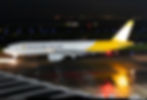
SIA cargo division was supplemented by 5 units of the Boeing 777-F, which were operated by Singapore Airlines for DHL. (Photo: Planespotters.net) In 2023, the airline also continued to expand its network, reaching over 70 destinations and steadily increasing frequencies on key routes, while its low-cost subsidiary Scoot added new destinations in Southeast Asia and beyond to complement the group’s overall connectivity.

After the pandemic subsided in 2023, The airline continued to expand its network, while its low-cost subsidiary Scoot added new destinations in Southeast Asia and beyond to complement the group’s overall connectivity into Singapore. (Photo: Jetphotos.com) Fleet development remained central to Singapore Airlines’ strategy throughout this period. The airline continued operating a modern fleet that includes Airbus A350s, Airbus A380s, Boeing 777-300ERs, Boeing 787-10s, and Boeing 737 variants, reflecting a mix of ultra-long-haul, long-haul, and regional capabilities. Meanwhile, the airline also placed emphasis on cargo modernization, including orders for Airbus A350 freighters to replace older Boeing 747 freighters and improve efficiency in its cargo operations.
By 2024 and 2025, Singapore Airlines had not only recovered but surpassed pre-pandemic performance levels in several key metrics, including passenger numbers, revenue, and profitability. The airline’s network expanded further, reaching nearly 80 destinations, while its fleet size grew steadily as new aircraft were delivered.
Looking towards the future, Singapore Airlines has outlined ambitious plans for fleet renewal and network expansion. The airline is expected to continue taking delivery of new-generation aircraft, including additional Airbus A350 variants and next-generation Boeing 777-9 aircraft, which will replace older models and support growth on both long-haul and regional routes.
In terms of route development, Singapore Airlines is likely to focus on expanding connectivity between Asia and major markets in North America, Europe, and Oceania. Additionally, the continued growth of Scoot will enable the group to tap into price-sensitive segments and secondary cities, complementing the premium positioning of the mainline carrier.

Singapore Airlines continues to solidify its reputation as a global leader in aviation, consistently ranking among the world’s most elite carriers for its uncompromising commitment to luxury and service. SIA remains the gold standard for travellers seeking a refined, seamless, and high-end journey around the world. (Photo: Singaporeair.com)
Airline Factual Information
Singapore Airlines' (SIA or SQ) hub is located at Changi Airport, Singapore. From here it spans an incredible passenger service to approximately 80 international destinations across 35 countries, maintaining its status as a premier global carrier with a network that reaches six continents. While the combined group network including its subsidiary Scoot covers over 120 destinations in 46 countries, the mainline Singapore Airlines operation focuses on approximately 78 to 82 airports. This network includes significant service across Southeast Asia, North Asia, Europe, and the Southwest Pacific.
Singapore Airlines Cargo operates SIA's freighter fleet and manages the cargo-hold capacity in SIA's passenger aircraft.
Scoot is also a wholly owned subsidiary, operating as a low-cost carrier also in Changi Airport.
Singapore Airlines offers five classes of service – Suites, first class, business class, premium economy class, and economy class. Major upgrades to its cabin and in-flight services have now been completed for the Airbus A380-800's and subsequently on the Boeing 777-300ER.
Below are the current destinations* operated by Singapore Airlines:
Region 🗺️
Destinations 🌍🌎🌏
Singapore
• Singapore Changi Airport
East Asia
• China: Beijing–Capital, Beijing–Daxing, Chengdu–Tianfu, Chongqing, Guangzhou, Shanghai–Pudong, Shenzhen, Xiamen • Hong Kong: Hong Kong • Japan: Fukuoka, Nagoya–Centrair, Osaka–Kansai, Tokyo–Haneda, Tokyo–Narita • South Korea: Seoul–Incheon • Taiwan: Taipei–Taoyuan
Southeast Asia
• Brunei: Bandar Seri Begawan • Cambodia: Phnom Penh, Siem Reap • Indonesia: Denpasar, Jakarta–Soekarno–Hatta, Medan, Surabaya • Malaysia: Kuala Lumpur, Penang • Myanmar: Yangon • Philippines: Manila • Thailand: Bangkok–Suvarnabhumi, Phuket • Vietnam: Da Nang, Hanoi, Ho Chi Minh City
South Asia
• Bangladesh: Dhaka • India: Ahmedabad, Bengaluru, Chennai, Delhi, Hyderabad, Kochi, Kolkata, Mumbai • Maldives: Malé • Nepal: Kathmandu • Sri Lanka: Colombo
Southwest Pacific
• Australia: Adelaide, Brisbane, Cairns, Darwin, Melbourne, Perth, Sydney • New Zealand: Auckland, Christchurch
Europe
• Belgium: Brussels • Denmark: Copenhagen • France: Paris–Charles de Gaulle • Germany: Frankfurt, Munich • Italy: Milan–Malpensa, Rome–Fiumicino • Netherlands: Amsterdam • Spain: Barcelona • Switzerland: Zurich • United Kingdom: London–Gatwick, London–Heathrow, Manchester
Middle East & Africa
• South Africa: Cape Town, Johannesburg • Turkey: Istanbul • United Arab Emirates: Dubai
Americas
• United States: Houston–Intercontinental, Los Angeles, New York–JFK, Newark, San Francisco, Seattle/Tacoma
*Updated April 2026
Singapore Airlines operates a predominantly widebody fleet, until the second re-introduction of the Boeing 737 in March 2021 following the merger with SilkAir. The airline also operates Boeing 747-400F and Boeing 777F freighters for its cargo division.
As of 2026, the airline has an impressive portfolio of 160 aircraft. It operates some of the most modern and advanced fleets with upgraded A380-800 and Boeing 777-300ER, together with new airframes as the Airbus A350-900 and Boeing 787-10 Dreamliner.
It's major new aircraft to join the fleet in the coming years is the new Boeing 777-9, which is awaiting certification of the type before its introduced to official passenger services. SIA has 31 units on order.
Below is the current fleet* operated by Singapore Airlines:
Aircraft Type
In Service
On Order
Configuration (F, C, P, Y)
Boeing 737 MAX 8
21
8
(C) 2-2 / (Y) 3-3
Airbus A350-900 (Medium Haul)
24
0
(C) 1-2-1 / (Y) 3-3-3
Airbus A350-900 (Long Haul)
34
0
(C) 1-2-1 / (P) 2-4-2 / (Y) 3-3-3
Airbus A350-900 (ULR)
7
0
(C) 1-2-1 / (P) 2-4-2
Boeing 787-10
28
3
(C) 1-2-1 / (Y) 3-3-3
Boeing 777-300ER
22
0
(F) 1-2-1 / (C) 1-2-1 / (P) 2-4-2 / (Y) 3-3-3
Boeing 777-9
0
31
(F) 1-2-1 / (C) 1-2-1 / (P) 2-4-2 / (Y) 3-3-3
Airbus A380-800
12
0
(F) 1-1 / (C) 1-2-1 / (P) 2-4-2 / (Y) 3-4-3
*Updated April 2026
(Configuration: F = First Class, C = Business Class, P = Premium Economy , Y = Economy)

Reviews and comments ⭐
What Stands Out 😀👍 | Needs Improvement 🫤👎 |
✅ World-Class Service: Passengers consistently praise the "Singapore Girl" cabin crew for their exceptional professionalism, warmth, and attention to detail. | 👎 High Ticket Pricing: Many travellers note that fares are significantly higher than competitors, making it a "luxury splurge" that isn't always budget-friendly. |
✅ Exceptional Food & Beverage: The "Book the Cook" service and the overall quality of international cuisine in all classes are frequently cited as the best in the sky. | 👎 Difficult Refund Processes: A common complaint involves the slow handling of refunds and difficulty reaching customer service during travel disruptions. |
✅ Industry-Leading IFE: The KrisWorld entertainment system is highly rated for its massive selection of latest movies, high-resolution screens, and high-speed Wi-Fi. | 👎 Inconsistent Seat Comfort: While new cabins are praised, some passengers find older regional seats or certain Premium Economy configurations to be narrow or lacking legroom. |
✅ Changi Hub Experience: The seamless transit experience and world-class lounges at Singapore Changi Airport add significant value to the overall journey. | 👎 Strict Weight Policies: Some passengers report frustration with the rigid enforcement of cabin baggage weight limits, even when the bag meets size requirements. |
✅ Hygiene & Cleanliness: Travelers frequently commend the airline for maintaining impeccable cabin cleanliness and high standards of sanitation across the fleet. | 👎 Premium Economy Value: Some reviewers feel the gap between Economy and Premium Economy isn't large enough to justify the substantial price increase on certain routes. |
*Reviews are collected from independent sites and compelled by the most representative reviews and comments. Planet Airlines Ltd remains impartial to any airlines.