


Airline Chronological History
In 1919, a young aviator lieutenant named Albert Plesman sponsored the ELTA aviation exhibition in Amsterdam. The exhibition was a great success; after it closed several Dutch commercial interests intended to establish a Dutch airline, which Plesman was nominated to head. In September 1919, Queen Wilhelmina awarded the yet-to-be-founded KLM its "Royal" predicate. On 7 October 1919, eight Dutch businessmen, founded KLM as one of the first commercial airline companies. Plesman became its first administrator and director.
The first KLM flight took place on 17 May 1920 from Croydon Airport, London, to Amsterdam. The flight was flown using a leased De Havilland DH-16, which was carrying two British journalists and some newspapers. In April 1921, after a winter hiatus, KLM resumed its services using its own pilots, and Fokker F.II and Fokker F.III aircraft. In 1921, KLM started scheduled services.

KLM first flight was on the 17 May 1920 from Croydon Airport, London, to Amsterdam, using a De Havilland DH-16. (Photo:members.upc.nl) 
The Fokker F.III aircraft were the first aircraft to offer scheduled services for KLM in 1921. (Photo:aviationphotocompany.com) KLM's first intercontinental flight took off on 1 October 1924. The final destination was Jakarta, Java, in the Dutch East Indies; the flight used a Fokker F.VII.7. In September 1929, regular scheduled services between Amsterdam and Jakarta commenced. Until the outbreak of the Second World War in 1939, this was the world's longest-distance scheduled service by airplane. By 1926, it was offering flights to Amsterdam, Rotterdam, Brussels, Paris, London, Bremen, Copenhagen, and Malmö, using primarily Fokker F.II and Fokker F.III aircraft.
The Douglas DC-2 was introduced on the Jakarta service in 1934. The first experimental transatlantic KLM flight was between Amsterdam and Curaçao in December 1934 using the Fokker F.XVIII. The first of the airline's Douglas DC-3 aircraft were delivered in 1936; these replaced the DC-2s on the service via Jakarta to Sydney. KLM was the only civilian airline to receive the Douglas DC-5; the airline used two of them in the West Indies

The DC-3 was introduced in 1936, flying many of KLM's European routes. (Photo:mediastorehouse.com) When Germany invaded the Netherlands on 10 May 1940, a number of KLM aircraft, mostly DC-3s and a few DC-2s, were en route to or from the Far East, or were operating services in Europe. Five DC-3s and one DC-2 were taken to England. During the war, these aircraft and crew members flew scheduled passenger flights between Bristol and Lisbon under BOAC registration. After the end of the Second World War in August 1945, KLM immediately started to rebuild its network. Since the Dutch East Indies were in a state of revolt, Plesman's first priority was to re-establish KLM's route to Jakarta. This service was reinstated by the end of 1945. Domestic and European flights resumed in September 1945, initially with a fleet of Douglas DC-3s and Douglas DC-4s.
On 21 May 1946, KLM was the first continental European airline to start scheduled transatlantic flights between Amsterdam and New York City using Douglas DC-4 aircraft. By 1948, KLM had reconstructed its network and services to Africa, North and South America, and the Caribbean resumed.

After WW II KLM began began running services between the recently liberated Amsterdam and the U.K with DC4. (Photo:edcoatescollection.com) Long-range, pressurized Lockheed Constellations and Douglas DC-6s joined KLM's fleet in the late 1940s; the Convair 240 short range pressurized twin engined airliner began European flights for the company in late 1948. During the immediate post-war period, the Dutch government expressed interest in gaining a majority stake in KLM, thus nationalizing it. Plesman allowed the Dutch government to acquire a minority stake in the airline. The expansion of the network continued in the 1950s with the addition of several destinations in western North America. KLM's fleet expanded with the addition of new versions of the Lockheed Constellation in 1953.
On 31 December 1953, the founder and president of KLM, Albert Plesman, died at the age of 64. He was succeeded as president by Fons Aler. The Netherlands government increased its ownership of the company to two-thirds, thus nationalizing it. The board of directors remained under the control of private shareholders. In July 1957, the airline introduced its Douglas DC-7C, the last KLM aircraft with piston engines, which opened the transpolar route from Amsterdam via Anchorage to Tokyo on 1 November 1958.

In the late 1940's KLM introduced the first pressurised Lockheed Constellations planes for long haul flights. (Photo:members.upc.nl) 
From July 1957 KLM used the last piston aircraft in its fleet, with the DC-7C. (Photo:flickr.com) The four-engine turboprop Vickers Viscount 800 was introduced on European routes in 1957. Beginning in September 1959, KLM introduced the four-engine turboprop Lockheed L-188 Electra onto some of its European and Middle Eastern routes.
In March 1960, the airline introduced the first Douglas DC-8 jet into its fleet. The KLM logo was largely redesigned in 1961 by F.H.K. Henrion. The crown, formed by a line, four blue circles and a cross, was retained. By 1966, the stake of the Dutch government in KLM was reduced to a minority stake of 49.5%. In 1966, KLM introduced the Douglas DC-9 on European and Middle East routes.

The Lockheed L-188 Electra was introduced in 1959 and replaced older DC2 and DC3. (Photo:members.upc.nl) 
The first jet aircraft, the DC-8, was delivered and started operations in 1960. (Photo:Plane Spotters.net) The new terminal buildings at Amsterdam Airport Schiphol opened in April 1967, and in 1968 the stretched Douglas DC-8-63 entered service. With 244 seats, it was the largest airliner at the time. KLM was the first airline to put the higher-gross-weight Boeing 747-200B into service in February 1971, this began the airline's use of widebody jets.

In 1971 KLM started using wide bodied aircraft with the Boeing 747-200B. (Photo:wikimedia.org) In 1972, it purchased the first of several McDonnell Douglas DC-10 aircraft. In 1973, Sergio Orlandini was appointed to succeed Gerrit van der Wal as president of KLM. At the time, KLM, as well as other airlines, had to deal with overcapacity. Orlandini proposed to convert KLM 747s to "combis" that could carry a combination of passengers and freight in a mixed configuration. In November 1975, the first of these Boeing 747-200B Combi aircraft were added to the KLM fleet. The oil crisis of 1973, which caused difficult economic conditions, led KLM to seek government assistance in arranging debt refinancing. The airline issued additional shares of stock to the government in return for its money. In the late 1970s, the government's stake had again increased to a majority of 78%, re-nationalizing it. The company management remained under the control of private stakeholders.

Another wide-bodied jet joined in 1972, the DC-10-30. At the same time KLM changed its image with a more colorful livery. (Photo:jetphotos.net) In 1983, it reached an agreement with Boeing to convert ten of its Boeing 747-200 aircraft to stretched-upper-deck configuration. The converted aircraft were called Boeing 747-200SUD or 747-300, which the airline operated in addition to three newly build Boeing 747-300s. In 1983, KLM took delivery of the first of ten Airbus A310 passenger jets. Sergio Orlandini retired in 1987 and was succeeded as president of KLM by Jan de Soet.
In 1986 the Dutch government's shareholding in KLM was reduced to 54.8 percent. It also replaced its short haul fleet with the arrival of Boeing 737-300 aircraft and later B737-400 in 1989. For long haul routes, the Boeing 747-400 was introduced in June 1989.

The Boeing 737-300 was introduced in 1986 for European Services. (Photo:airliners.net) 
In 1989, the large Jumbo 747-400 was introduced to cover long haul routes. (Photo:airport-data.com) With the liberalization of the European market, KLM started developing its hub at Amsterdam Airport Schiphol by feeding its network with traffic from affiliated airlines. In December 1991, KLM was the first European airline to introduce a frequent flyer loyalty program, which was called Flying Dutchman.
KLM City Hopper, the regional franchise of KLM, was established on 1 April 1991 and started operations the same year. It was formed from the merger of NLM CityHopper and Netherlines. KLM Cityhopper had Europe's largest fleet composition of all Fokker-built aircraft: the Fokker 50, 70 and 100.

In 1991, KLM created KLM City Hopper for its regional operations. (Photo:hiveminer.com) In January 1993, the United States Department of Transportation granted KLM and Northwest Airlines anti-trust immunity, which allowed them to intensify their partnership. The same year KLM also received its MD-11 for long haul operations. KLM introduced the Boeing 767-300ER in July 1995.
In January 1996, KLM acquired a 26% share in Kenya Airways, the flag-carrier airline of Kenya. In August 1998, KLM repurchased all regular shares from the Dutch government to make KLM a private company. In 1999 the first next generation Boeing 737-800 arrived into the fleet for European and short haul routes.

In 1993 the MD-11 arrived into the KLM fleet. (Photo:airlinereporter.com) 
The Boeing 767-300ER was deployed for high demand routes and transatlantic flights. (Photo:planespotters.net) 
For its European flights KLM introduced the Boeing 737-800 in 1999. (Photo:planepictures.net) KLM renewed its intercontinental fleets by replacing the Boeing 767s, Boeing 747-300s, and eventually the McDonnell Douglas MD-11, with Boeing 777- 200ERs and Airbus A330-200s in 2003. The MD-11s remained in service until October 2014.
KLM saw the introduction of the Boeing 737-900 in August 2001, at the time the largest member of Boeing’s Next Generation 737 family. The aircraft was delivered on 29 August 2001, becoming one of the earliest -900 variants to enter commercial service in Europe. The Boeing 737-900 offered increased capacity compared to the airline’s existing 737-700 and 737-800 fleet.

The 737-900 joined KLM in August 2001, this aircraft was painted later on with the colours of the SkyTeam alliance which KLM is a founder member. (Photo: Planespotters.net) On 30 September 2003, Air France and KLM agreed to a merger plan in which Air France and KLM would become subsidiaries of a holding company called Air France– KLM. Both airlines would retain their own brands, and both Charles de Gaulle Airport in Paris and Amsterdam Airport Schiphol would become key hubs. In September 2004, the merger was completed by creation of the Air France–KLM holding company. KLM's long standing joint venture with Northwest Airlines, which merged with Delta Air Lines in 2008, was unaffected by the merger with Air France. As both airlines KLM and Northwest joined the SkyTeam alliance in September 2004.
KLM's first Boeing 777-200R landed at Schiphol in October 2003. The aircraft provided services to Cape Town, Nairobi, and New York. Two years later the first Airbus A330-200 was introduced on 25 August 2005.

During the end of 2003, KLM received its first Boeing 777-200LR (pictured) which replaced B767 and MD-11 (Photo:wikimedia.org) 
The Airbus A330-200 was deployed in 2005. (Photo:Airplane-Pictures.net) In March 2007, KLM started to use the Amadeus reservation system, along with partner Kenya Airways. In 2008 the airline announced its fleet renewal programme for its regional subsidiary KLM City Hopper, starting with an order of up to 17 Embraer 190-100 aircraft to replace its ageing and inefficient Fokker 50 aircraft and older Fokker 100 jets. The first Embraer jets E190 arrived one year later in 2009. In 2008 the airline also received its first Boeing 777-300ER for long haul operations.

The E190 (pictured) was the replacement for the older Fokker 50/70/100 for KLM City Hopper. (Photo:aeroinside.com) 
In 2008, KLM took delivery of the Boeing 777-300ER for long haul flights to Asia and America. (Photo:papercraftsquare.com) Beginning in September 2010, KLM integrated the passenger division of Martinair into KLM, transferring all personnel and routes. By November 2011, Martinair consisted of only the cargo and maintenance division. On 19 June 2012, KLM made the first transatlantic flight fuelled partly by sustainable biofuels to Rio de Janeiro. This was the longest distance any aircraft had flown on biofuels at the time.
On the 14 November 2015, KLM welcomed its first Boeing 787-9 Dreamliner.

From 2015, KLM took delivery of the newer generation aircraft, the Dreamliner B787-9. (Photo: Jetphotos.com) Later in 2015, KLM continued to receive Boeing 777-300ER aircraft, which had been introduced in 2008 but were still being delivered in additional units during the mid-2010s. These aircraft were deployed on high-density routes, gradually replacing older Boeing 747-400s and supplementing the 777-200ER fleet.
In 2016, KLM celebrated its 97th year of operations and reported improved financial results, benefiting from lower fuel prices and ongoing efficiency measures. Network development continued with new destinations such as Colombo in Sri Lanka, launched in October 2016. During this period, the airline began preparing for a new phase of fleet renewal, announcing plans to introduce the Boeing 787 Dreamliner as a replacement for the aging Airbus A330-200 and A330-300 fleets. Throughout 2016, additional 787-9 aircraft were delivered, allowing KLM to deploy them on routes such as Abu Dhabi, Xiamen, and later North American destinations.
In 2018, KLM introduced new long-haul destinations including Fortaleza in Brazil. KLM also placed orders for the larger Boeing 787-10 variant, signalling confidence in future demand and the need for higher-capacity, fuel-efficient aircraft. The airline continued to refurbish its existing fleet, including cabin upgrades across the 777 and A330 aircraft, introducing new World Business Class seats and improved in-flight entertainment systems.
The year 2019 was particularly significant as KLM celebrated its centenary, becoming the oldest airline in the world still operating under its original name. This milestone was marked by a series of commemorative events, special liveries on selected aircraft, and the publication of historical materials highlighting the airline’s long heritage. The airline also introduced flights to Bangalore (Bengaluru) in India in late 2019, strengthening its position in the growing Indian market.
Fleet developments reached an important point in 2019 with the delivery of the first Boeing 787-10 in June of that year. This new aircraft was deployed from 2 July on KLM services to Kilimanjaro and Dar es Salaam. Throughout 2019, additional 787-10s were delivered, and they were deployed on routes such as Dubai, Toronto, and other major destinations. At the same time, KLM continued the gradual retirement of its Boeing 747-400 fleet, with several aircraft withdrawn from service during the year. The Airbus A330 fleet remained in active service, primarily on medium-density long-haul routes, but its future replacement by the 787 family was increasingly evident.

In 2019 KLM celebrated its 100th Birthday! It also received the first of the Boeing 787-10. (Photo: Jetphotos.com) In June 2019, the Air France–KLM group confirmed that KLM would phase out its Airbus A330 fleet in the longer term and focus primarily on Boeing 777 and 787 aircraft for intercontinental operations, signalling an early commitment to simplification and efficiency.
However, this forward-looking trajectory was abruptly interrupted in 2020 by the global outbreak of COVID-19. Like most international carriers, KLM experienced an unprecedented collapse in passenger demand due to border closures and travel restrictions. The airline was forced to ground a large portion of its fleet at Amsterdam Schiphol Airport and pivot operations toward repatriation flights and cargo services.
With the pandemic ongoing, KLM Royal Dutch Airlines decided to retire its last B747-400 aircraft. Marking a historic milestone in the airline’s fleet development, the final Boeing 747-400 passenger flight took place on 29 March 2020, when aircraft PH-BFT, operated its last commercial service from Mexico City to Amsterdam Schiphol as flight KL686.
The withdrawal of the Boeing 747-400 marked the end of nearly 50 years of 747 operations at KLM, which had begun with the introduction of the Boeing 747-200 in 1971. The retirement closed a significant chapter in the airline’s history, as KLM transitioned fully to a more modern and fuel-efficient long-haul fleet centered on the Boeing 777 and Boeing 787 Dreamliner families.
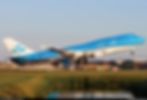
The final Boeing 747-400 passenger flight took place on 29 March 2020, when aircraft PH-BFT, operated its last commercial service from Mexico City to Amsterdam Schiphol. (Photo: Planespotters.net) During 2021, the airline began to stabilise operations as travel restrictions gradually eased, but the recovery remained uneven. That year marked an important strategic decision: the Air France–KLM group placed a major order for 100 Airbus A320neo family aircraft to replace the ageing Boeing 737 Next Generation fleet used on European routes.
The period between 2022 and 2023 was characterised by rebuilding and strategic repositioning. Demand for international travel returned strongly, allowing KLM to restore and expand its network. At the group level, Air France–KLM also strengthened partnerships and pursued investments, such as its involvement in Scandinavian Airlines (SAS), which later joined the SkyTeam alliance in 2024.
At the same time, KLM intensified its fleet renewal strategy. In 2023, the group announced a landmark agreement with Airbus for 50 Airbus A350 aircraft, with options for 40 more. These aircraft are scheduled to enter service from 2026 onward and will replace older Boeing 777-200ERs and Airbus A330s.
By 2024, KLM had entered a more confident growth phase, combining recovery with expansion. One of the most notable developments was the introduction of the Airbus A321neo into the fleet, marking the beginning of a new era for European operations, with the deployment on routes such as Copenhagen, Berlin, and Stockholm reflects a focus on high-demand intra-European markets.

In August 2024, KLM saw the introduction of the Airbus A321neo into the fleet, replacing older B737-800. (Photo: Planespotters.net) Network expansion also accelerated during this period. KLM announced new intercontinental routes linking Amsterdam with San Diego in the United States, Georgetown in Guyana, and Hyderabad in India, all scheduled to launch in 2025.
In 2025, the airline continued expanding both capacity and destinations. KLM planned to operate 161 destinations worldwide, including 92 in Europe and 69 intercontinental. New additions included destinations such as Kittilä in Finland, while routes like Barbados were reintroduced. Capacity increases were particularly notable on routes to India, North America, and the Caribbean.
Looking ahead, KLM’s future plans revolve around three main pillars: fleet modernisation, network expansion, and sustainability. The introduction of the Airbus A350 in 2026, will enable the airline to operate more efficiently on long-haul routes and potentially open new destinations that were previously less economically viable. At the same time, the continued rollout of the A320neo and A321neo will modernise its European network and allow for higher capacity on key routes.
Today KLM, together with Air France and it's SkyTeam partners offer an extensive route network to over 160 destinations worldwide. It's one of the longest living airlines offering an excellent on-board product, great service and an easy access from its main hub at Amsterdam to reach the city. The fleet is being modernised and upgraded in the last years with the introduction of the new Boeing 787-10 and Airbus A350 with the latest advancements in technology, comfort and connectivity.
Airline Factual Information
KLM and its partners serve 163 destinations in 70 countries on five continents from their hub at Amsterdam Airport Schiphol, where KLM centrals all its flights and connections from one terminal. At present it does not operate to domestic destinations, since rail travel is quicker and more frequent . However its subsidiary airline Transavia, a low cost airline, operates from both Eindhoven and Rotterdam.
KLM and Air France have a strategic connection and destination routing, the same as Amsterdam Schiphol Airport has a close relation to Paris Charles de Gaulle Airport. The networks and hubs are closely aligned. This so-called dual-hub system is beneficial for AIR FRANCE-KLM as a whole, it means connections and flights can be operating from either hub which ultimately gives more choice for the passenger and makes both airlines more flexible and able to coordinate better whenever there might be flight disruptions.
It’s also worth noting that with its franchise airline, KLM City Hopper flies to smaller airports bringing feeder flights from regional airports across Europe to Amsterdam. In Asia it also has a big presence with the creation of the KLM Asia brand, where it flies to most Asian routes, including the AMS-TPE-MNL route.
KLM flies direct to the following destinations* including those served by KLM City Hopper and KLM Asia:
Region 🗺️
Destinations 🌍🌎🌏
Domestic
• Netherlands: Amsterdam
Africa
• Egypt: Cairo • Ethiopia: Addis Ababa • Ghana: Accra • Kenya: Nairobi • Nigeria: Lagos • Rwanda: Kigali • South Africa: Cape Town, Johannesburg • Tanzania: Dar es Salaam, Kilimanjaro, Zanzibar • Uganda: Entebbe
Asia
• China: Beijing, Shanghai • Hong Kong: Hong Kong • India: Bengaluru, Delhi, Mumbai • Indonesia: Denpasar, Jakarta • Japan: Osaka, Tokyo • Kazakhstan: Almaty, Astana • Malaysia: Kuala Lumpur • Philippines: Manila • Singapore: Singapore • South Korea: Seoul • Taiwan: Taipei • Thailand: Bangkok • Vietnam: Ho Chi Minh City
Europe
• Austria: Graz, Innsbruck, Salzburg, Vienna • Belgium: Brussels • Croatia: Dubrovnik, Split, Zagreb • Czech Republic: Prague • Denmark: Aalborg, Billund, Copenhagen • Finland: Helsinki, Rovaniemi • France: Bordeaux, Lyon, Marseille, Montpellier, Nantes, Nice, Paris, Rennes, Toulouse • Germany: Berlin, Bremen, Dresden, Düsseldorf, Frankfurt, Hamburg, Hanover, Munich, Nuremberg, Stuttgart • Greece: Athens, Corfu, Heraklion, Mykonos, Rhodes, Santorini, Thessaloniki • Hungary: Budapest • Ireland: Cork, Dublin • Italy: Bologna, Florence, Genoa, Milan, Naples, Rome, Turin, Venice • Luxembourg: Luxembourg City • Norway: Ålesund, Bergen, Kristiansand, Oslo, Sandefjord, Stavanger, Trondheim • Poland: Gdańsk, Kraków, Poznań, Warsaw, Wrocław • Portugal: Lisbon, Porto • Romania: Bucharest • Serbia: Belgrade • Slovenia: Ljubljana • Spain: Alicante, Barcelona, Bilbao, Ibiza, Madrid, Málaga, Valencia • Sweden: Gothenburg, Linköping, Stockholm • Switzerland: Geneva, Zurich • Turkey: Istanbul • United Kingdom: Aberdeen, Belfast, Birmingham, Bristol, Cardiff, Edinburgh, Glasgow, Humberside, Inverness, Leeds/Bradford, London, Manchester, Newcastle upon Tyne, Norwich, Southampton, Teesside
North America
• Canada: Calgary, Edmonton, Montreal, Toronto, Vancouver • Mexico: Cancún, Mexico City • United States: Atlanta, Austin, Boston, Chicago, Houston, Las Vegas, Los Angeles, Miami, Minneapolis/St. Paul, New York City, Portland, Salt Lake City, San Francisco, Washington, D.C.
South America & Caribbean
• Argentina: Buenos Aires • Aruba: Oranjestad • Barbados: Bridgetown • Brazil: Fortaleza, Rio de Janeiro, São Paulo • Chile: Santiago • Colombia: Bogotá, Cartagena • Costa Rica: Liberia, San José • Curaçao: Willemstad • Ecuador: Guayaquil, Quito • Panama: Panama City • Peru: Lima • Sint Maarten: Philipsburg • Suriname: Paramaribo • Trinidad and Tobago: Port of Spain
Middle East
• Israel: Tel Aviv • Kuwait: Kuwait City • Oman: Muscat • Saudi Arabia: Dammam, Riyadh • United Arab Emirates: Dubai
Updated April 2026
KLM has one of the largest fleets in Europe. Together with it's franchise airlines it operates over 120 aircraft with new deliveries, in the majority from Airbus arriving in the following years. New Aircraft to be introduced in from 2026, are the the Airbus A320neo and the A350-900.
The airline now has a reliable, modern and efficient fleet of aircraft, from the smaller Embraer E175 right up to the big Boeing 777-300ER for ultra long haul routes.
The fleet* of KLM consists of the following aircraft, including those flown by KLM City Hopper and KLM Asia:
Aircraft Type
In Service
On Order
Configuration (F, C, P, Y)
Embraer 175 (Cityhopper)
17
—
(C) 2-2 / (Y) 2-2
Embraer 190 (Cityhopper)
19
—
(C) 2-2 / (Y) 2-2
Embraer 195-E2 (Cityhopper)
25
—
(C) 2-2 / (Y) 2-2
Airbus A320neo
—
9
(C) 3-3 / (Y) 3-3
Airbus A321neo
15
18
(C) 3-3 / (Y) 3-3
Boeing 737-700
6
—
(C) 3-3 / (Y) 3-3
Boeing 737-800
28
—
(C) 3-3 / (Y) 3-3
Boeing 737-900
5
—
(C) 3-3 / (Y) 3-3
Airbus A330-200
6
—
(C) 2-2-2 / (Y) 2-4-2
Airbus A330-300
5
—
(C) 2-2-2 / (Y) 2-4-2
Boeing 787-9 Dreamliner
13
—
(C) 1-2-1 / (P) 2-3-2 / (Y) 3-3-3
Boeing 787-10 Dreamliner
15
—
(C) 1-2-1 / (P) 2-3-2 / (Y) 3-3-3
Airbus A350-900
—
22
(C) 1-2-1 / (P) 2-4-2 / (Y) 3-3-3
Boeing 777-200ER (incl. Asia)
15
—
(C) 2-2-2 / (P) 2-4-2 / (Y) 3-4-3
Boeing 777-300ER (incl. Asia)
16
—
(C) 2-2-2 / (P) 2-4-2 / (Y) 3-4-3
Updated April 2026
(Configuration: C = Business Class, P = Premium Economy , Y = Economy)


Reviews and comments ⭐
What Stands Out 😀👍 | Needs Improvement 🫤👎 |
✅ Professional Cabin Crew: Many passengers consistently praise the flight attendants for being friendly, attentive, and maintaining a high standard of "Dutch hospitality" even on long-haul routes. | 👎 Unresponsive Customer Support: A major pain point is the difficulty in reaching a human representative, with many citing endless loops with the AI chatbot and long wait times on phone lines. |
✅ Schiphol Transit Efficiency: Frequent flyers often highlight Amsterdam Schiphol as a preferred hub due to its logical layout and the efficiency of KLM’s self-service baggage drop-off systems. | 👎 Refund and Compensation Delays: Passengers frequently complain about waiting several months for reimbursements related to cancelled flights or out-of-pocket expenses, often requiring legal escalation. |
✅ Modern Long-Haul Fleet: The newer Boeing 787 Dreamliners receive high marks for cabin quietness, larger windows, and a more comfortable "Economy Comfort" seating option. | 👎 Inconsistent Ground Service: While air crews are praised, ground staff at various airports are sometimes described as dismissive or unhelpful during mass disruption events like weather delays. |
✅ Business Class Experience: The "World Business Class" continues to be a highlight, particularly for the iconic Delft Blue miniature houses and the high quality of the meals and privacy in the new seat configurations. | 👎 Baggage Handling Issues: There have been significant reports of delayed or lost luggage, specifically during peak seasons or technical outages at the Amsterdam hub, with poor tracking updates provided to owners. |
✅ User-Friendly App: The mobile app is frequently cited as one of the better airline apps for easy check-in, real-time flight tracking, and managing booking changes on the go. | 👎 Economy Class Catering: Recent reviews suggest a decline in the quality and portion sizes of meals in Economy, with some passengers noting fewer snack options and "tasteless" main dishes. |
*Reviews are collected from independent sites and compelled by the most representative reviews and comments. Planet Airlines Ltd remains impartial to any airlines.