

Airline Chronological History
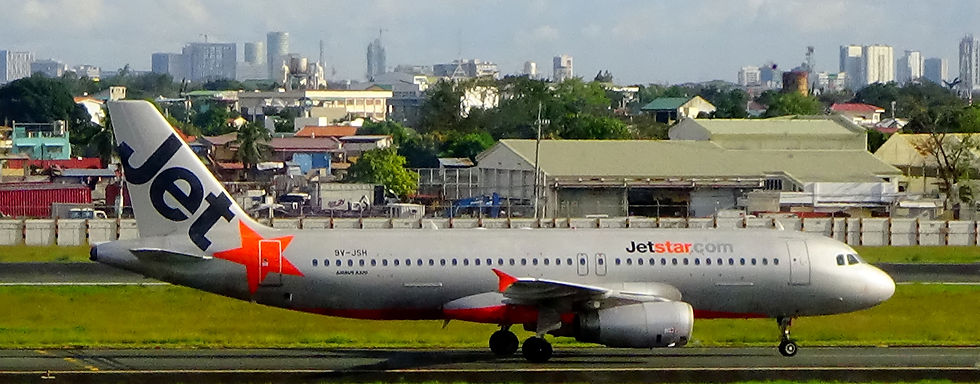
The airline was established by Qantas in 2003 as a low-cost domestic subsidiary. Qantas had previously acquired Impulse Airlines on 20 November 2001 and operated it under the QantasLink brand, but following the decision to launch a low cost carrier, re-launched the airline under the Jetstar brand. Domestic passenger services began on 25 May 2004, soon after the sale of tickets for the inaugural flight in February 2004 using Boeing 717.

In February 2004, Jetstar started operations with transferred Boeing 717 from Qantas. (Photo:planespotters.net) International services to Christchurch, New Zealand, commenced on 1 December 2005. Although owned by Qantas, its management operates largely independent of Qantas through the company formerly known as Impulse Airlines. The Airbus A320 formed the backbone of the fleet , with the first arrivals in late 2004.
The first Airbus A320 for Jetstar arrived at the end of 2004. (Photo:airliners.net) The first flight of sister airline Jetstar Asia Airways took off from its Singapore hub to Hong Kong on 13 December 2004. This marked Qantas' entry into the Asian low cost market and signified its intention to compete with Singapore Airlines on its home ground. Qantas controls a 42.5% stake in Jetstar Asia's ownership.
On 1 December 2005, Jetstar commenced operations from Sydney, Melbourne, Brisbane and the Gold Coast to Christchurch in New Zealand. In July 2006, Jetstar and Jetstar Asia were brought together under the Jetstar brand. Online bookings for both carriers were integrated into Jetstar.com. It was also at this time that the airline took delivery of the transferred Airbus A330 from QANTAS, to fly the long haul routes. In July 2007, Qantas acquired an 18% stake in Vietnam's Pacific Airlines, to increase to 30% by 2010. The airline was relaunched on 23 May 2008 as Jetstar Pacific.

As the airline expanded into long haul markets, it acquired the Airbus A330, which it operated until 2015.(Photo:australianaviation.com.au) On 1 August 2008, Jetstar announced that it had signed an agreement with the Northern Territory Government in Australia to make Darwin Airport an international hub with plans for seven aircraft to be based in Darwin. However in December 2013, Jetstar announced that it would be closing the Darwin base in May 2014 and re-positioning the based aircraft to Adelaide.
Also, 2008 saw the introduction of the larger A321 aircraft for high demand routes, which were put into operation with the mainstream fleet and the Jetstar Pacific fleets.

Airbus A321 aircraft joined the fleet from 2008. (Photo: Airplane-pictures.net) On 28 April 2009, Jetstar commenced daily direct services from Auckland to the Gold Coast and Sydney. On 10 June 2009, Jetstar commenced domestic New Zealand flights between Auckland, Wellington, Christchurch and Queenstown using Airbus A320 aircraft; services to Dunedin commenced later. Jetstar replaced Qantas subsidiary Jetconnect on these routes.
From 1 February 2011, Jetstar started its cooperation with the oneworld alliance, allowing people booking an itinerary with a full oneworld member to include a Jetstar flight in the itinerary. In August 2011, Jetstar's parent Qantas announced that it would set up a new airline to be called Jetstar Japan. The airline started operating on 3 July 2012, using new Airbus A320.

In 2012 Jetstar Japan was launched with more Airbus A320. (Photo:Planespotters.net) In November 2013, Jetstar moved its head office from Melbourne's CBD to the suburb of Collingwood. In February 2014, Jetstar signed a codeshare agreement with Emirates Airlines as a continuation of the agreement between Emirates and Qantas, Jetstar's parent airline. By the end of 2013, Jetstar took delivery of three Boeing 787-8 Dreamliner, marking the start of an extensive fleet renewal.

The Boeing 787-8 was delivered new to Jetstar in 2013. (Photo:boeing.mediaroom.com) In December 2015, Jetstar started operating regional services in New Zealand, with 5 turboprop Bombardier Q300 operated under the Jetstar brand by the regional airline Eastern Australia Airlines, one of Qantas’ subsidiaries. In July 2016, Jetstar Pacific signed a memorandum of understanding for 10 Airbus A320ceo. The order, the first direct purchase by the airline, the new aircraft allowed Jetstar Pacific to expand operations on its international network from Vietnam.

Jetstar operated for a short while the Dash Q300, on behalf of Eastern Australia Airlines. (Photo: airliners.net) Jetstar announced a delay to it’s delivery of new Airbus A320neo as a cost cutting measures after the airline experienced a downfall in revenues during 2017. As demand increased the airline also leased some bigger A321 for popular routes.
Qantas Group confirmed that it will take delivery of 18 Airbus A321neo long-range (A321LR) aircraft from mid-2020. All destined for Jetstar. They will operate the A321neo LRs on routes like Melbourne and Sydney to Bali, currently operated by the 787-8 Dreamliner. The arrival of the first four long range neos will also add capacity on these routes with potential to free up some 787-8 for use on other leisure routes such as Vietnam, China, Thailand and Hawaii.

Jetstar Pacific received new Airbus A321 with enhanced sharklets from early 2020. (Photo:Planespotters.net) During 2018, Jetstar continued to refine its role within the Jetstar Group structure, which included affiliated carriers such as Jetstar Japan and Jetstar Asia. Around this period, the airline emphasized Asia—particularly China and Southeast Asia.
The outbreak of the pandemic in 2020 marked a severe disruption. Like most global airlines, Jetstar dramatically reduced operations due to border closures, particularly in Australia, which maintained some of the strictest travel restrictions in the world. International flying was largely suspended, and domestic operations were scaled down significantly. During this period, Jetstar relied heavily on the financial backing and strategic direction of the Qantas Group, which undertook major restructuring measures.
As travel restrictions began to ease in 2021 and especially throughout 2022, Jetstar entered a recovery phase characterized by renewed fleet investment and a gradual restoration of its network. One of the most significant milestones in this period was the delivery of the Airbus A321LR in July of 2022, marking the introduction of a new generation of aircraft into the fleet. These aircraft allowed Jetstar to launch routes that were previously uneconomical or technically unfeasible with older narrowbody aircraft, including longer trans-Tasman and Southeast Asian routes.

In July 2022, JetStar took delivery of the Airbus A321Neo which improved efficiency on its longer routes. (Photo: planespotters.net) Simultaneously, Jetstar began to rebuild its international network, focusing on leisure destinations that aligned with its low-cost model. Routes to destinations such as Bali, Thailand, Japan, and South Korea became central to its recovery strategy, as pent-up demand for holiday travel surged following the pandemic. By 2023 and 2024, the airline had not only restored but significantly expanded its international capacity.
Fleet modernization became increasingly visible during this recovery phase. Deliveries of Airbus A320neo aircraft began in late 2024, introducing improved fuel efficiency and lower operating costs compared to older A320ceo models. These aircraft were part of a broader Qantas Group order that aimed to modernize Jetstar’s short-haul fleet while reducing emissions and operating expenses.

Deliveries of new Airbus A320neo aircraft began in December 2024, introducing improved fuel efficiency and lower operating costs compared to older A320ceo models. (Photo: planespotters.net) By 2024 and 2025, Jetstar had entered a strong expansion phase, driven by both market conditions and strategic repositioning. The airline capitalized on reduced competition in certain segments of the Australian aviation market, particularly following the collapse or retrenchment of competitors, which created additional market share.
During 2025, Jetstar launched numerous new routes across domestic Australia, the trans-Tasman market, and Asia. Domestically, the airline increased frequencies and capacity on key routes such as Adelaide–Melbourne, Adelaide–Brisbane, and Adelaide–Perth, adding hundreds of thousands of seats annually and strengthening its position in the Australian domestic leisure market.
Internationally, in 2025, Jetstar launched new services connecting Australia to the Philippines, including routes from Brisbane to Cebu and Perth to Manila, marking a strategic expansion into a fast-growing tourism and diaspora market.
The airline also significantly expanded its operations to Bali, one of its most important leisure destinations, including launching new routes from secondary Australian cities such as Newcastle and the Sunshine Coast.
In parallel, Jetstar increased its trans-Tasman operations between Australia and New Zealand, adding capacity and launching new routes such as Brisbane to Queenstown, reflecting strong demand for leisure travel, particularly seasonal tourism like skiing.
Another major structural development occurred in 2025 with the closure of Jetstar Asia, the Singapore-based affiliate, as part of a strategic realignment of the group’s Asian operations. Aircraft and resources from this closure were redeployed within the broader Jetstar network, including to Jetstar Airways and Jetstar Japan, further consolidating operations and focusing on more profitable markets.
Fleet development continued to play a central role in Jetstar’s strategy during this period. By 2025 and 2026, the airline operated a modern and diversified fleet that included Airbus A320s, A320neos, A321LRs, and Boeing 787-8 Dreamliners, with additional A321XLR aircraft on order for delivery through the decade.
In addition to acquiring new aircraft, Jetstar invested heavily in upgrading its existing fleet. Beginning in late 2025 the airline launched a major refurbishment program for its Boeing 787 Dreamliners. This upgrade included new seating configurations, increased business class capacity, onboard Wi-Fi, and redesigned cabins.

Jetstar began a major refurbishment program for its Boeing 787 Dreamliners. This upgrade included new seating configurations, increased business class capacity, onboard Wi-Fi, and redesigned cabins. (Photo: flighthacks.com.au) By 2026, Jetstar’s network had expanded to its largest ever size, with over 20 domestic and 20 international destinations, supported by the addition of multiple new routes and increased frequencies across existing markets. The airline continued to focus on leisure-oriented routes, leveraging its cost structure to offer competitive fares while maintaining high aircraft utilization.
Airline Factual Information
By 2026, Jetstar’s network had expanded with over 20 domestic and 20 international destinations Its main hub is located at Melbourne airport in Australia. It also has hubs at Auckland (NZ), Christchurch (NZ), Sydney, Cairns, Perth and Gold Coast.
Jetstar, currently flies to the following destinations*: (not including Jetstar Japan)
Region 🗺️
Destinations 🌍🌎🌏
Domestic
• Australia: Adelaide, Albury, Alice Springs, Avalon, Ballina, Brisbane, Busselton-Margaret River, Cairns, Canberra, Darwin, Gold Coast, Hamilton Island, Hervey Bay, Hobart, Launceston, Mackay, Melbourne, Newcastle, Perth, Sunshine Coast, Sydney, Townsville, Uluru, Whitsunday Coast
Oceania
• New Zealand: Auckland, Christchurch, Dunedin, Queenstown, Wellington • Cook Islands: Rarotonga • Fiji: Nadi • Vanuatu: Port Vila
Asia
• Indonesia: Denpasar (Bali) • Japan: Osaka, Tokyo • South Korea: Seoul • Thailand: Bangkok, Phuket • Vietnam: Ho Chi Minh City
Updated April 2026
With a focus on Airbus Aircraft for its short and high density routes and Boeing 787-8 Dreamliners for its long haul operations, Jetstar has strategic fleet which can adapt depending on route demand and season. It is still on track with a fleet renewal programme with more Airbus A321Neo and soon to be delivered A321XLR. Jetstar counts with the most modern aircraft, a young age and has an excellent safety record.
The airline’s fleet* consists of the following aircraft:
Aircraft Type
In Service
On Order
Configuration (F, C, P, Y)
Airbus A320-200
55
—
(Y) 3-3
Airbus A320neo
5
8
(Y) 3-3
Airbus A321-200
6
—
(Y) 3-3
Airbus A321LR
23
2
(Y) 3-3
Airbus A321XLR
—
12
(C) 2-2 / (Y) 3-3
Boeing 787-8
11
—
(C) 2-3-2 / (Y) 3-3-3
Updated April 2026
(Configuration: C = Business Class, P = Premium Economy , Y = Economy)


Reviews and comments ⭐
What Stands Out 😀👍 | Needs Improvement 🫤👎 |
✅ Affordable Fares: Many passengers praise the airline for providing some of the lowest entry-level prices for domestic and regional travel, making flying accessible on a budget. | 👎 Frequent Disruptions: A significant number of reviews highlight recurring issues with last-minute flight cancellations and lengthy delays, often with minimal notice provided to travellers. |
✅ Modern Long-Haul Fleet: The Boeing 787 Dreamliner receives positive mentions for its cabin quietness, larger windows, and better overall comfort compared to the narrow-body fleet. | 👎 Strict Baggage Enforcement: Passengers frequently complain about a "zero tolerance" approach to carry-on weight limits, resulting in high unexpected fees at the boarding gate. |
✅ Efficient Self-Service: The online booking system and airport self-check-in kiosks are often described as user-friendly and a quick way to navigate the pre-flight process. | 👎 Limited Legroom: On shorter regional flights, many passengers find the seat pitch to be very tight and uncomfortable, especially on older Airbus A320 aircraft. |
✅ Friendly Cabin Crew: Despite being a low-cost carrier, many reviews note that the onboard flight attendants are professional, energetic, and helpful during the journey. | 👎 Customer Support Challenges: Contacting the airline for refunds or rebooking is a major pain point, with many citing long wait times on live chat and difficulty reaching a human representative. |
✅ Operational Punctuality: While controversial, a segment of regular flyers reports that when there are no technical issues, flights often depart and arrive exactly on or ahead of schedule. | 👎 Lack of Inclusive Amenities: Reviewers often express frustration at the "pay-for-everything" model, where basics like water, blankets, and seat selection can significantly drive up the final cost. |
*Reviews are collected from independent sites and compelled by the most representative reviews and comments. Planet Airlines Ltd remains impartial to any airlines.