


Airline Chronological History
Japan Air Lines was established on 1 August 1951, with the government of Japan recognising the need for a reliable air transportation system to help Japan grow in the aftermath of the World War II. Its headquarters were located in Ginza, Chūō, Tokyo. The first flights started between the 27 and 29 August, with invitational flights on a Douglas DC-3 Kinsei. On 25 October, Japan's first postwar domestic airline service was inaugurated, using a Martin 2-0-2 aircraft.

Commercial operations began in late August 1951 with the Martin 2-0-2 aircraft. (Photo:wikimedia.org) On 1 August 1953, the government of Japan, reinvested in aviation and passed the Japan Air Lines Company Act, forming a new state-owned Japan Air Lines on 1 October, known simply as JAL, which assumed all assets and liabilities of its private predecessor. By 1953, the JAL network extended northward from Tokyo to Sapporo and Misawa, and westward to Nagoya, Osaka, Iwakuni, and Fukuoka using DC3 and DC4 aircraft.
On 2 February 1954, the airline began international flights, carrying 18 passengers from Tokyo to San Francisco on a Douglas DC-6B via Wake Island and Honolulu. The early flights were advertised as being operated by American crews and serviced by United Air Lines in San Francisco. The airline, also operated Douglas DC-7Cs during the late 1950s.

In 1953 JAL expanded its domestic network by adding DC-4 aircraft. (Photo:geta-o.jp) 
By 1958 to open up new international routes it used the bigger DC-7C. (Photo:geta-o.jp) JAL flew to Hong Kong via Okinawa by 1955, having pared down its domestic network to Tokyo, Osaka, Fukuoka, and Sapporo. By 1958, the Hong Kong route had been extended to Bangkok and Singapore. With DC-7Cs, JAL was able to fly nonstop between Seattle and Tokyo in 1959.
In 1960, the airline took delivery of its first jet, a Douglas DC-8, introducing jet service on the Tokyo-Honolulu-San Francisco route. It used the DC8 extensively, retiring the last of the type in 1987. JAL also began flying to Seattle and Hong Kong in 1960. At the end of 1961, JAL had transpolar flights from Tokyo to Seattle, Copenhagen, London, and Paris via Anchorage, Alaska. During the 1960s, JAL flew to many new cities, including Moscow, New York, and Pusan. Flights to Europe via India started in 1962, initially with Convair 880s.
In 1960, the first jets arrived, DC-8 were operated for long haul destinations. (Photo:Airliners.net) 
European routes where launched in 1962 with the Convair 880. (Photo:geta-o.jp) By 1965, Japan Air Lines was headquartered in the Tokyo Building in Marunouchi, Chiyoda, Tokyo. It also received its first Boeing 727-100 jets for domestic operations. Between 1967 and 1969, JAL had an agreement with Aeroflot to operate a joint service between Tokyo and Moscow using a Soviet Tupolev Tu-114. The flight crew included one JAL member, and the cabin crew had five members each from Aeroflot and JAL.
In 1972, enacted by the Japanese government, JAL was granted flag carrier status to operate international routes. The airline was also designated to operate domestic trunk routes in competition with All Nippon Airways and Toa Domestic Airlines.
The signing of a civil air transport agreement between China and Japan on 20 April 1974 caused the suspension of air routes between Taiwan and Japan on 21 April. A new subsidiary, Japan Asia Airways, was established on 8 August 1975, and air services between the two countries were restored on 15 September. During the 1970s, the airline bought the Boeing 747 in 1971 and McDonnell Douglas DC10 in 1976 for its growing routes within Japan and to other countries.

In 1965 the Boeing 727-100 was introduced for domestic flights. (Photo:jetphotos.com) 
The jumbo was first introduced in 1971. (Photo:http://fourtriangle.blogspot.com) 
The DC-10 was bought to operate routes to America and Europe from 1976. (Photo:flickr.com) In the 1980s, the airline introduced new Boeing 747-100SR, Boeing 747-SUD, and Boeing 767-200 (1985) to the fleet, and retired the Boeing 727s and Douglas DC-8s. In 1978, JAL started flights to São Paulo and Rio de Janeiro via Anchorage and San Juan. Until 2009, the airline operated fifth-freedom flights between New York and São Paulo and between Vancouver and Mexico City.
In 1987, Japan Airlines was completely privatised, and the other two airlines in Japan, All Nippon Airways and Japan Air System, were permitted to compete with JAL on domestic and international routes. Increased competition resulted in changes to the airline's corporate structure, and it was reorganised into three divisions: international passenger service, domestic passenger service, and cargo (including mail) service. In 1989, after the reorganization, the logo and brand were updated and modernised.
In 1985 the twin engined Boeing 767-200 improved economics for the airline and helped retired olde types. The branding was updated in 1989. (Photo:flickr.com) In September 1996, an agreement with the Walt Disney Company made Japan Airlines the official airline of Tokyo Disneyland. JAL Express was established in April 1997, with Boeing 737 aircraft. In the 1990s, the airline encountered further economic difficulties stemming from recessions in the United States and United Kingdom, plus a domestic downturn. Following years of profit since 1986, the airline began to post operating losses in 1992. Cost-cutting, including the formation of the low-cost JAL Express domestic subsidiary and the transfer of tourist operations to JALways (the successor to Japan Air Charter), helped return the airline to profitability in 1999.
In 1997, the airline placed orders for Boeing 777s, allowing for fleet renewal. It was one of eight airlines participating in the Boeing 777 design process, shaping the design to their specifications.

Japan Airlines used the Boeing 737-400 on domestic services from 1995. (Photo:flickr.com) In 2001, Japan Air System and Japan Airlines agreed to merge; and on 2 October 2002, they established a new holding company called Japan Airlines System, forming a new core of the JAL Group. Aircraft liveries were changed to match the design of the new JAL Group.

In 2001 Japan Air System and Japan Airlines merged, resulting in the Japan Airlines Group company. JAS fleet was taken over by JAL. (Photo:wikipedia.org) 
From the result of the merger JAL changed its logo depicting a "rising red sun" on its aircraft tails. (Photo:nycaviation.com) During 2001 and 2004, B767-300ER and B777-200ER aircraft were introduced on international flights. In addition to an extended range, they provided enhanced in-flight comfort. On 1 April 2004, JAL changed its name to Japan Airlines International and JAS changed its name to Japan Airlines Domestic.
On 1 October 2006, Japan Airlines International and Japan Airlines Domestic merged into a single brand, Japan Airlines International. The airline applied to join Oneworld on 25 October 2005. Japan Airlines, together with Malév and Royal Jordanian, joined the alliance on 1 April 2007. On 1 April 2008, JAL merged the operations of its subsidiary Japan Asia Airways (JAA) into JAL mainline operations.

In 2001 Japan Airlines introduced the Boeing 767-300 extended range aircraft. (Photo:airplane-pictures.net) 
Japan Airlines officially joined the Oneworld alliance in April 2007, painting some of its Boeing 777-200ER in the alliance livery. (Photo:airplane-pictures.net) In 2009, Japan Airlines suffered steep financial losses, despite remaining Asia's largest airline by revenue. As a result, the airline embarked on staff cuts and route cutbacks in an effort to reduce costs. After weeks of speculation, JAL applied for protection under the Corporate Rehabilitation Law (the Japanese equivalent of Administration in the United Kingdom or a Chapter 11 bankruptcy filing in the United States) on 19 January 2010. Although JAL ultimately exited bankruptcy while remaining in the Oneworld alliance, JAL was seriously considering accepting a strategic investment from Delta Air Lines and joining the SkyTeam alliance during the period between September 2009 and February 2010.
After JAL filed for bankruptcy, there were further media reports that JAL would leave Oneworld in favor of SkyTeam, but JAL president Masaru Onishi said on 1 February that the new JAL leadership was "seriously reviewing the issue from scratch, without being influenced by previous discussions," On 7 February, several news outlets reported that JAL would decide to keep its alliance with American Airlines and end talks with Delta.
JAL emerged from bankruptcy protection in March 2011. Following its exit from bankruptcy protection, JAL began several new partnerships within the Oneworld alliance. The transpacific joint venture between JAL and American commenced in April 2011. JAL formed Jetstar Japan, a low-cost carrier joint venture with Qantas subsidiary Jetstar Airways, in July.
Japan Airlines took delivery of its first two Boeing 787-8s in March 2012, becoming the first airline to receive a 787 powered by the General Electric GEnx-1B engine. Following domestic proving flights to train operations, flight, cabin and maintenance personnel, the airline begun the first North American 787 service on 22 April connecting Narita Airport with Boston’s Logan International Airport.

Japan Airlines took delivery of its first two Boeing 787-8s in March 2012. (Photo: Planespotters.net) I
n July 2013, in conjunction with oneworld member airline, Finnair, JAL starting new nonstop services to Helsinki.
In 2015, Japan Airlines also took delivery of another new aircraft for its growing fleet, the Boeing 787-9, which arrived in June 2015, and was put into service on the Tokyo – Jakarta route.

June 2015, Japan Airlines took delivery of the Boeing "Dreamliner" B787-9, as part of its fleet renewal programme. (Photo: Planespotters.net) In June 2019, Japan Airlines celebrated the arrival of the first Airbus aircraft since 2006, the new A350-900 was deployed in key international routes after domestic crew training. As well it will receive the A350-1000, scheduled to arrive by 2023.
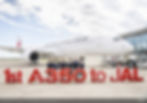
The 13th June 2019, Japan Airlines took delivery of the first Airbus A350-900. (Photo: Airbus.com) In 2019, Japan Airlines was preparing for growth tied to the anticipated increase in international travel demand, particularly linked to the Tokyo Olympics. However, the outbreak of the COVID-19 pandemic in early 2020 dramatically altered the trajectory of both JAL and the global airline industry. International travel demand collapsed almost entirely due to border closures and travel restrictions. Between 2020 and 2021, JAL implemented extensive health and safety protocols under its “JAL FlySafe” program, including enhanced sanitation procedures, mandatory mask usage, and aircraft disinfection processes.
As the global aviation market began to recover in 2022 and 2023, Japan Airlines shifted its focus toward rebuilding its network and modernizing its fleet. The airline gradually reinstated international routes and increased capacity in response to recovering demand, particularly in transpacific and intra-Asian markets. At the same time, JAL pursued a strategic fleet renewal program centred on fuel efficiency and passenger experience. The introduction of the Airbus A350 family became a cornerstone of this effort, with A350-900 aircraft increasingly deployed on domestic routes and the newer A350-1000 configured for long-haul international services. Japan Airlines received its first Airbus A350-1000 on March 20, 2023. The delivery marked JAL’s introduction of the largest member of the A350 family, aimed at replacing older Boeing 777 aircraft on high-demand international routes. JAL deployed the new A350-1000 on transpacific and key European routes, including services to New York, London, and Paris.

Japan Airlines received its first Airbus A350-1000 on March 20, 2023. (Photo: Planespotters.net) Fleet expansion efforts intensified in 2023 and 2024. In 2023, JAL announced plans to re-enter the dedicated cargo market by converting Boeing 767-300 aircraft into freighters, marking its return to cargo-specific operations after more than a decade. In parallel, the airline committed to significant aircraft orders, including Boeing 787-9 Dreamliners, with an initial order of ten aircraft and options for ten more. Additional plans included potential acquisitions of Airbus A350 variants and A321neo aircraft, indicating a balanced fleet strategy between Airbus and Boeing manufacturers.
In March 2023, Japan Airlines announced plans to refresh its narrow body fleet, as the airline placed an order for 38 Boeing 737 MAXs, to de delivered from 2026.
Network expansion resumed strongly by 2024. One of the most notable developments was the launch of a new direct route between Tokyo Haneda and Doha, marking the first nonstop connection between Japan and the Middle East operated by a Japanese airline.
In addition to traditional aviation operations, JAL also explored emerging mobility technologies. In 2024, a joint venture involving JAL secured rights to potentially acquire up to 100 electric vertical take-off and landing (eVTOL) aircraft, signalling an interest in developing urban air mobility solutions in Japan.
In January 2024, a Japan Airlines Airbus A350 was involved in a runway collision with a Japan Coast Guard aircraft at Tokyo’s Haneda Airport. While all 379 passengers and crew aboard the JAL aircraft survived, the incident resulted in fatalities on the smaller aircraft. The accident praised the crew and all the passengers for following safety instructions and not taking hand baggage with them, which saved all lifes.
From a corporate and strategic perspective, JAL also strengthened its position within the low-cost carrier segment through its involvement in Jetstar Japan.
The airline has come a long way since it's humble beginnings, after many mergers and new partnerships have matured, the airline is going from strength to strength raising the quality of its products and services. It strives in giving it's passengers a wider choice of destinations and partnerships through its membership with Oneworld alliance. It remains a strong brand in Japan, where competition has intensified in the last years, presenting many new challenges and a quick market adaptation.
It remains a competitive airline with good future prospects and many achievements in passenger comfort, connectivity and communication. Together with new aircraft delivered from Boeing and Airbus and advanced technologies, Japan Airlines is set to embrace the future ahead and continue to fly for many more decades to come.
Airline Factual Information
Japan Airlines serves 60 domestic destinations and 39 international destinations in Asia, the Americas, Europe and Oceania, excluding codeshare agreements.
The airline's hubs are Tokyo' Narita (NRT) and Tokyo Haneda Airport (HND). With other cities being focus cities, such as Osaka's Kansai International Airport and Osaka International Airport in Itami.
The airline group also serves 59 domestic destinations within Japan. JAL group companies include Japan Airlines, J-Air, JAL Express, Japan Air Commuter, Japan Transocean Air and Ryukyu Air Commuter for domestic feeder services; and JAL Cargo for cargo and mail services.
Japan Airlines flies to the following destinations*:
Region 🗺️
Destinations 🌍🌎🌏
Domestic (Japan)
• Japan: Akita, Amami Oshima, Aomori, Asahikawa, Fukuoka, Hakodate, Hanamaki, Hiroshima, Izumo, Kagoshima, Kitakyushu, Kochi, Komatsu, Kumamoto, Kushiro, Matsuyama, Memanbetsu, Misawa, Miyazaki, Nagasaki, Nagoya, Naha, Niigata, Obihiro, Oita, Okayama, Osaka, Sapporo, Sendai, Shirahama, Takamatsu, Tokushima, Tokyo, Yamagata, Yamaguchi-Ube
East Asia
• China: Beijing, Dalian, Guangzhou, Shanghai, Tianjin • Hong Kong: Hong Kong • South Korea: Seoul • Taiwan: Taipei
Southeast Asia
• Indonesia: Jakarta • Malaysia: Kuala Lumpur • Philippines: Manila • Singapore: Singapore • Thailand: Bangkok • Vietnam: Hanoi, Ho Chi Minh City
South Asia & Middle East
• India: Delhi, Bengaluru • Qatar: Doha
Americas
• Canada: Vancouver • United States: Boston, Chicago, Dallas/Fort Worth, Honolulu, Kona, Los Angeles, New York City, San Diego, San Francisco, Seattle
Europe
• Finland: Helsinki • France: Paris • Germany: Frankfurt • United Kingdom: London (LHR)
Oceania
• Australia: Melbourne, Sydney
Updated March 2026
Japan Airlines has a strong fleet of over 146 aircraft. The fleet now consists of a mix fleet between Airbus and Boeing aircraft. With new Airbus A321Neo arriving from 2028 and Boeing 737-8Max from 2026.
The fleet* of Japan Airlines consists of the following aircraft:
Aircraft Type
In Service
On Order
Configuration (F, C, P, Y)
Embraer 170
18
—
(Y) 2-2
Embraer 190
14
—
(C) 1-2 / (Y) 2-2
Boeing 737-800
62
—
(C) 2-2 / (Y) 3-3
Boeing 737 MAX 8
—
38
(C) 2-2 / (Y) 3-3
Airbus A321neo
—
11
(C) 2-2 / (Y) 3-3
Boeing 767-300ER
24
—
(C) 2-2-2 / (Y) 2-3-2
Airbus A350-900
15
20
(F) 2-2-2 / (C) 2-4-2 / (Y) 3-3-3
Boeing 787-8
23
—
(C) 2-2-2 / (Y) 2-4-2
Boeing 787-9
22
10
(C) 1-2-1 / (P) 2-3-2 / (Y) 2-4-2
Boeing 777-300ER
9
—
(F) 1-2-1 / (C) 2-3-2 / (P) 2-4-2 / (Y) 3-3-3
Airbus A350-1000
6
7
(F) 1-1-1 / (C) 1-2-1 / (P) 2-4-2 / (Y) 3-3-3
Updated March 2026
(Configuration: F = First Class, C = Business Class, P = Premium Economy , Y = Economy)


Reviews and comments ⭐
What Stands Out 😀👍 | Needs Improvement 🫤👎 |
✅ Superior Economy Comfort: JAL is famously praised for its "Sky Wider" seats, which offer more legroom and a 2-4-2 layout on the 787, avoiding the cramped 3-3-3 industry standard. | 👎 Difficult Customer Support: Many reviews highlight the frustration of long wait times on phone lines and a lack of modern support options like live chat or easy email communication. |
✅ Exquisite In-flight Dining: Passengers frequently describe the meals—especially the Japanese "Kyoto" style sets—as the highest quality food found in the sky across all cabin classes. | 👎 Rigid Policies: Feedback often mentions an "inflexible" approach to requests, such as difficulty changing seats or accommodating last-minute meal preferences even when the flight isn't full. |
✅ Impeccable Service (Omotenashi): The cabin crew are consistently described as exceptionally polite, attentive, and professional, embodying traditional Japanese hospitality. | 👎 Outdated IT and Website: Frequent flyers often complain about a clunky website and mobile app that make online check-in and managing complex bookings a "dated" experience. |
✅ Punctuality and Reliability: JAL is often cited for its high rate of on-time departures and efficient baggage handling, with luggage frequently arriving at the carousel within minutes of landing. | 👎 Inconsistent In-flight Entertainment: While the hardware is modern, passengers note that the selection of Western movies can be limited or lack English subtitles compared to other global carriers. |
✅ Cleanliness and Hygiene: Cabin environments, including the lavatories, are routinely praised for being spotless and well-maintained throughout even the longest long-haul flights. | 👎 Excessive Cabin Announcements: Some passengers find the frequency and length of PA announcements—often repeated at length in multiple languages—to be disruptive during rest periods. |
✅ Premium Economy Value: The Premium Economy product is often called "Business Lite" due to its generous recline, dedicated leg rests, and high-quality noise-canceling headphones. | 👎 Saga of High Surcharges: Recent reviews express disappointment over high fuel surcharges and taxes on award tickets, which can significantly increase the "out-of-pocket" cost of flying on miles. |
*Reviews are collected from independent sites and compelled by the most representative reviews and comments. Planet Airlines Ltd remains impartial to any airlines.