


Airline Chronological History
Formed in 1949, the CAAC Airlines, was an all-encompassing organisation responsible for civil aviation in China as it was tasked with passenger transport, resource development and survey work, air traffic control, aircraft maintenance and personnel training. The decentralisation decision would result in numerous regional airlines, with four main carriers to be responsible for the majority of international and domestic air traffic: Air China, China Southern Airlines, China Eastern Airlines and China Southwest Airlines.
In 1988, the CAAC granted its seven regional divisions, among which was the Guangzhou Regional Administration. China Southern Airlines began flying under its own name and livery in February 1991. At this time, the aircraft operated were Antonov An-24, Boeing 737 and Boeing 757, along with helicopters and agricultural aircraft, all inherited from the former CAAC Airlines.

Some early planes were inheritad from CAAC Airlines since 1987, like the B757-200. (Photo:wikimedia.org) 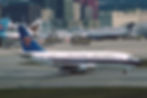
Another type operated in the early stages of China Southern was the B737-200 since 1988. (Photo:.flickr.com) In 1991, it introduced more modern types such as the Boeing 737-300/500 and in 1992 the Boeing 767-300ER joined the fleet. In December 1992, the airline placed an order for six Boeing 777s.The airline completed its decentralisation from CAAC when it gained independence on 10 October 1993. During the airline's early years, the carrier was the dominant domestic carrier. Owing to Air China's status as the country's flag carrier, the airline was entitled to extensive international service rights, with China Eastern and China Southern’s international networks confined to mainly East Asia and within Asia, respectively.
Like other Chinese carriers, China Southern was subjected to CAAC's exclusive right to grant operating rights for every prospective route. Starting in the mid-1990s, China Southern sought to expand its international reach beyond Asia. In December 1995, the Chinese and US governments signed an aviation agreement that would allow the commencement of non-stop air services between the two countries. After having been granted the right to establish services to Amsterdam in early 1996, the airline started Guangzhou– Beijing–Amsterdam, its first long-haul route, in November 1996. The following year, the carrier commenced non-stop trans-Pacific services to Los Angeles, as well as services to Brisbane.
The start of European and American services coincided with the arrival of the Boeing 777s, the first of which was delivered in late December 1995.
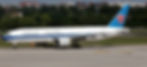
In 1995, China Southern took delivery of the Boeing 777-200 for long haul operations to the USA and Europe. (Photo:aeronauticsonline.com) Nevertheless, the airline planned to double its fleet of 67 aircraft. In April 1996, China Southern placed an order for 10 Airbus A320s; the delivery of the first aircraft, and China Southern's first Airbus, was made in 1997.
The end of the 1990s was a period of consolidation for the Chinese airline industry. Initially, China Southern looked to acquire several smaller nonprofitable domestic carriers. Among the deals was the purchase of 60% shares of Guizhou Airlines.

As more modern aircraft types were available on the market, China Southern selected the Airbus A320 for its domestic routes in 1997. (Photo:airliners.net) Although there was considerable resistance to CAAC's call to rationalise the industry, in July 2000, the administrative body announced that the ten airlines under its direct management will be merged into three airline groups, revolving around Air China, China Eastern Airlines and China Southern itself.
Within a month, China Southern had started absorbing Zhengzhou based Zhongyuan Airlines, which at the time operated five Boeing 737s and two Xian Y-7 turboprops. The carrier would later merge with Shenyang based China Northern Airlines and Urumqi-based Xinjiang Airlines to form China Southern Air Holding Co., a process that took more than two years to complete. Consequently, China Southern's fleet expanded from some 140 aircraft to over 210. The takeovers meant that the carrier became the main airline at Shenyang and Urumqi. As a result, China Southern Airlines became one of the "Big Three" carriers in the country.
Below were some of the airlines which were absorbed by China Southern in 2000 to create the "big three" airlines in China: Air China, China Eastern and China Southern itself.

Zhongyuan Airlines (Boeing 737-300) (Photo:airliners.net) 
China Northern Airlines. (Airbus A321)(Photo:planespotters.net) 
Xinjiang Airlines (Ilyushin Il-86) (Photo: airhistory.net) With the mergers and new acquisitions, China Southern expanded its fleet and it incorporated new types like the Airbus A300-600R, ATR 72-500, Embraer ERJ-145 or the McDonnell Douglas MD-90-30. However many of this were retired as soon as 2011 as more modern types arrived. Since then, it has successively taken over shareholding stocks and joined the equity in numerous other Chinese carriers, including being the major shareholder of Xiamen Airlines (55%) and Chongqing Airlines (60%); it also invested in Sichuan Airlines (39%). Amidst the major consolidation of the airline industry, China Southern in April 2000 started dedicated cargo services from Shenzhen using a Boeing 747-200F (which was quickly upgraded to the Boeing 747-400F) .
In July 2000, routes to Sydney and Melbourne were added. In September 2003, China Southern signed a purchase agreement for four Airbus A330-200s, to be delivered from 2005. China Southern became the first mainland Chinese A330 operator with the delivery of the first example February 2005. China Southern followed up in September 2005 with a further order for eight A330-300s and two A330-200s.

As the airline expanded, so did the fleet with the arrival of the first Airbus A330 in 2005. (Photo:Airplane-Pictures.net) China Southern placed several landmark widebody-aircraft orders from Airbus and Boeing, in January 2005. The carrier became the first (and so far the only) Chinese carrier to commit to the Airbus A380 double-deck aircraft. On the same month, China Southern, also placed a bulk order for 60 Boeing 787s. In 2006 and 2007, China Southern Airlines confirmed another order of Boeing 737-700s and Boeing 737-800s. As well it ordered Airbus A320 family aircraft and more A330. The deliveries would continue through 2010.
Following two years of negotiations which had started in August 2004, China Southern officially joined the Sky Team alliance on 15 November 2007, becoming the eleventh carrier to join the grouping and the first mainland Chinese carrier to join an airline alliance.

China Southern relied on the Boeing 737-800 for many of its domestic and regional routes since 2002. (Photo:Airplane-Pictures.net) Earlier during the month, the CAAC had approved the temporary operations of charter flights between mainland China and Taiwan. Then in July 2008, a China Southern Airlines Airbus A330 landed in Taipei on a regular flight. The governments of China and Taiwan had both agreed to allow direct flights across the Taiwan Strait, ending six decades of limited air travel between the two sides.
During 2009, China Southern Airlines remodelled its strategy from a point to point hub to a full hub and spoke carrier, which had been proofed successful. Along with that, the airline has rapidly expanded its international market share, particularly in Australia. On 21 January 2010, China Southern Airlines announced an order for an additional 20 A320-200s. In November 2010, China Southern Airlines signed an agreement with Airbus for the purchase of six A330s and 30 more A320s–200. On 11 January 2011, China Southern Airlines announced a lease for 10 Embraer E-190, set to be delivered from the second half of 2011.

In 2011 China Southern received the Embraer E190 for regional operations and thinner routes. (Photo:airliners.net) On 27 January 2011, China Southern Airlines was awarded a four-star ranking by Skytrax. Then another milestone on 17 October 2011, China Southern Airlines made its first flight with the Airbus A380. Initially, the airline deployed the A380s on domestic routes, flying between Guangzhou, Beijing, Shanghai and Hong Kong. Then for international flights, the A380 was deployed on Guangzhou-Los Angeles services. Early A380 operations were unprofitable and the aircraft, underutilised; services to Sydney were thus launched in October 2013.

Also in 2011, the airline took delivery of it's first super jumbo A380. The only operator of the type at the time. (Photo:stuff.co.nz) While China Southern, like the other "Big Three" Chinese carriers, had been expanding rapidly since 2000, much of their activities had been focused on the domestic market, the carrier then shifted its outlook overseas in order to sustain growth. Owing to the location of its hub at Guangzhou, the airline concentrated its international expansion on Australasia. In June 2012, with the inauguration of services from Guangzhou to London-Heathrow, the airline started marketing its services connecting Europe and Australia as the "Canton Route” The carrier had added cities such as Auckland, Istanbul, Perth and Vancouver to its route map.
During May–June 2012, China Southern Airlines has recruited Dutch flight attendants to serve the First and Business class sections for flights from Guangzhou to Amsterdam and deployed the A380 on the route. The first Boeing 787-8 was handed over to China Southern in June 2013, becoming the first Chinese carrier to take delivery of the Boeing 787 Dreamliner, which will be used as part of its international expansion plans.

Another new type to join the airline was the Boeing 787-8 in 2013 to fly international flights. (Photo:Planespotters.net) In February 2014, China Southern took delivery of its first of 10th Boeing 777- 300ERs ordered, and which is to be operated on the new North American routes. In April 2017, in an effort to facilitate its rapid international expansion, China Southern ordered 20 Airbus A350-900 aircraft. The Airbus A350s would start to be delivered between 2019 and 2022.

With ambitious expansion plans to make Guangzhou a mega transit hub, the airline took delivery of more Boeing 777-300ER in 2014. (Photo:Airplane-Pictures.net) In 2016 and 2017, China Southern continued strengthening its dual-hub strategy centered on Guangzhou Baiyun International Airport and Beijing. The airline expanded its frequencies linking Guangzhou with major intercontinental gateways such as London Heathrow, Rome, Vancouver, Los Angeles and San Francisco. During this period, the airline significantly increased frequencies as well to Australia and New Zealand, consolidating its strong presence in Sydney, Melbourne, Brisbane and Auckland. Fleet growth accelerated, supported by large orders for Boeing 787-8 and 787-9 Dreamliners and Airbus A350-900 aircraft. In 2017, China Southern introduced its first Airbus A350-900, becoming one of the earliest operators of the type in mainland China. The A350s were deployed on premium long-haul routes such as Guangzhou–London and later on services to Europe and Australia. At the same time, additional Boeing 777-300ER aircraft were delivered, strengthening capacity on high-demand transpacific routes.

In 2017, China Southern introduced its first Airbus A350-900, they were deployed on premium long-haul routes such as Guangzhou–London. (Photo: planespotters.net) A major strategic shift occurred in 2018 when China Southern announced it would leave the SkyTeam alliance, of which it had been a member since 2007. The withdrawal became effective on 1 January 2019. This decision marked a turning point in the airline’s international strategy. Rather than aligning with a single global alliance, China Southern pursued a more flexible partnership model, expanding bilateral agreements with carriers such as American Airlines, British Airways, Finnair, Japan Airlines and Qatar Airways. The airline also deepened cooperation with domestic partners and strengthened its role in China’s expanding aviation market. In 2018, China Southern relocated part of its Beijing operations to the newly constructed Beijing Daxing International Airport, which opened in September 2019.

Beijing Daxing International Airport, China Southern's new mega hub opened in September 2019. (Photo: edition.cnn.com) Fleet expansion remained central to corporate strategy between 2018 and 2019. China Southern continued accepting Airbus A320neo family aircraft for short- and medium-haul operations, as well as Airbus A321neos to increase capacity on dense domestic routes.
The outbreak of COVID-19 in early 2020 profoundly disrupted China Southern’s operations. International services were drastically reduced as China imposed strict border controls and global travel demand collapsed. The airline shifted focus to the domestic market, which recovered more quickly than international travel within China. Capacity was redeployed to major domestic trunk routes linking Guangzhou, Beijing, Shanghai, Chengdu and Shenzhen. China Southern also operated cargo-focused flights using passenger aircraft to transport medical supplies, converting portions of its fleet for freight operations to offset revenue losses. Financially, the airline recorded significant losses during 2020 and 2021, reflecting reduced passenger numbers and international restrictions.

The First A320Neo arrived in 2016, however with the 2019 pandemic, additional arrivals helped the airline restructure the fleet. (Photo: planespotters.net) 
Airbus A321neos helped to increase capacity on dense domestic routes during the pandemic in 2020. (Photo: planespotters.net) During the pandemic period, fleet adjustments accelerated. In 2022, China Southern confirmed the retirement of its Airbus A380 fleet, becoming the first Chinese airline to phase out the superjumbo. The A380s were gradually withdrawn from service as the airline prioritized more fuel-efficient twin-engine widebodies such as the Boeing 787 and Airbus A350. Deliveries of new A321neo and A320neo aircraft continued, supporting domestic recovery and replacing older A320ceo family jets. In parallel, China Southern introduced the domestically produced COMAC ARJ21 into its regional subsidiary operations and placed orders for the COMAC C919 narrowbody aircraft.

From June 2020, China Southern started to receive the Comac AR21 for its regional operations. (Photo: planespotters.net) From 2022 into 2023, as China progressively eased international travel restrictions, China Southern began restoring long-haul routes. Services to North America, Europe, Southeast Asia and Oceania were gradually reinstated. The airline resumed flights from Guangzhou and Beijing Daxing to destinations such as Los Angeles, New York, London, Amsterdam, Sydney and Vancouver, although frequencies initially remained below pre-pandemic levels due to regulatory limits and geopolitical complexities, particularly between China and the United States. The Russian airspace situation following the 2022 invasion of Ukraine affected European route planning, increasing flight times and operational costs for certain services.
In 2023 and 2024, recovery accelerated. China Southern expanded services to Southeast Asia, capitalizing on strong leisure demand to Thailand, Malaysia, Indonesia and Vietnam. Australia and New Zealand routes were progressively rebuilt as travel flows returned. The airline also strengthened its domestic network, maintaining its status as the largest carrier in China by fleet size and passenger numbers. Deliveries of Airbus A321neo aircraft continued, enhancing efficiency on high-density domestic routes. The airline also confirmed significant aircraft orders in 2023, including large commitments for Airbus A320neo family jets, reflecting confidence in long-term domestic growth. Additionally, progress continued toward introducing the COMAC C919 into mainline service, marking a milestone in Chinese civil aviation development.

China Southern was also an operator for the Comac C919, operating the Chinese made place from August 2024 on domestic and regional routes. (Photo: planespotters.net) By 2025 and into 2026, China Southern has focused on restoring and in some markets exceeding pre-pandemic capacity levels, particularly across Asia-Pacific. Fleet modernization remains ongoing, with older aircraft progressively retired and newer generation Airbus and Boeing models forming the backbone of operations. The airline continues to adapt its long-haul strategy amid evolving geopolitical conditions, shifting traffic flows and China’s broader economic trends. Despite the severe disruption caused by the pandemic, China Southern Airlines has maintained its position among the world’s largest carriers, characterized by extensive domestic coverage, expanding regional connectivity and a modernizing long-haul fleet centred on efficient twin-engine widebody aircraft. So as of today, the future for the airline looks bright.
Airline Factual Information
China Southern Airlines has formed an extensive network, covering all of China, radiating throughout Asia and linking Europe, America, Oceania & Africa, building a true international network. The airline operates to 193 destinations in 35 countries and regions across the world. In the recent years China Southern is committing to build up the Canton Route, making Guangzhou an international air hub. Now Guangzhou is becoming the first gateway between China mainland to Australasia and to Southeast Asia. It's main hubs at Beijing Daxing International Airport and Guangzhou Baiyun International Airport with secondary hubs at Shanghai Pudong International Airport, Chongqing Jiangbei International Airport, Ürümqi Diwopu International Airport, and Wuhan Tianhe International Airport, along with other focus cities in Changchun, Changsha, Dalian, Shenyang, Shenzhen, and Zhengzhou.
The airline operates to the following destinations*:
Updated February 2026
China Southern Airlines operates one of the largest fleets in Asia, a developed route network and a modern fleet of Aircraft from both Airbus and Boeing, with the addition of the Chinese built planes Comac AR21 and the Comac C919 put into service from 2020. Currently, China Southern Airlines operates more than 700 passenger and cargo aircraft.
The fleet* currently operated by China Southern Airlines consists of the following aircraft:
Updated February 2026


Reviews and comments ⭐
What Stands Out 😀👍 | Needs Improvement 🫤👎 |
✅ Excellent Value for Money: Passengers frequently highlight that fares are significantly cheaper than competitors while still being a "full-service" airline with baggage and meals included. | 👎 Communication Barriers: Non-Mandarin speakers often report significant difficulty communicating with ground staff and resolving issues via phone or email due to language gaps. |
✅ Modern & Comfortable Fleet: Many reviews praise the new Boeing 787 Dreamliners and Airbus A350s, noting they are clean, well-maintained, and offer generous legroom in Economy. | 👎 Rigid Customer Support: When flights are cancelled or missed, passengers often describe the refund and rebooking process as "bureaucratic" and "unhelpful," with little proactive assistance. |
✅ Attentive In-flight Service: Cabin crews are widely described as polite, professional, and very efficient with meal and drink services, often performing regular "fluid rounds." | 👎 Baggage & Transit Issues: Travelers frequently mention long queues at transit security in Guangzhou (CAN) and occasional reports of mishandled or delayed luggage during complex connections. |
✅ Generous Meal Portions: For an economy product, the food is often described as "tasty and plentiful," particularly for those who enjoy Asian cuisine and traditional rice or noodle dishes. | 👎 Lack of Food Variety: On long-haul multi-leg journeys, passengers complain that the menu lacks variety, often serving the same "beef or chicken" options across every segment. |
✅ Modern Hub Facilities: The newer terminals at Guangzhou Baiyun and Beijing Daxing are praised for being spacious, clean, and featuring modern architecture with ample seating. | 👎 Hit-or-Miss Entertainment: While newer planes have great screens, several recent reviews mention "frozen" or malfunctioning in-flight entertainment systems that go unrepaired during the flight. |
*Reviews are collected from independent sites and compelled by the most representative reviews and comments. Planet Airlines Ltd remains impartial to any airlines.